The Master of the Eternal
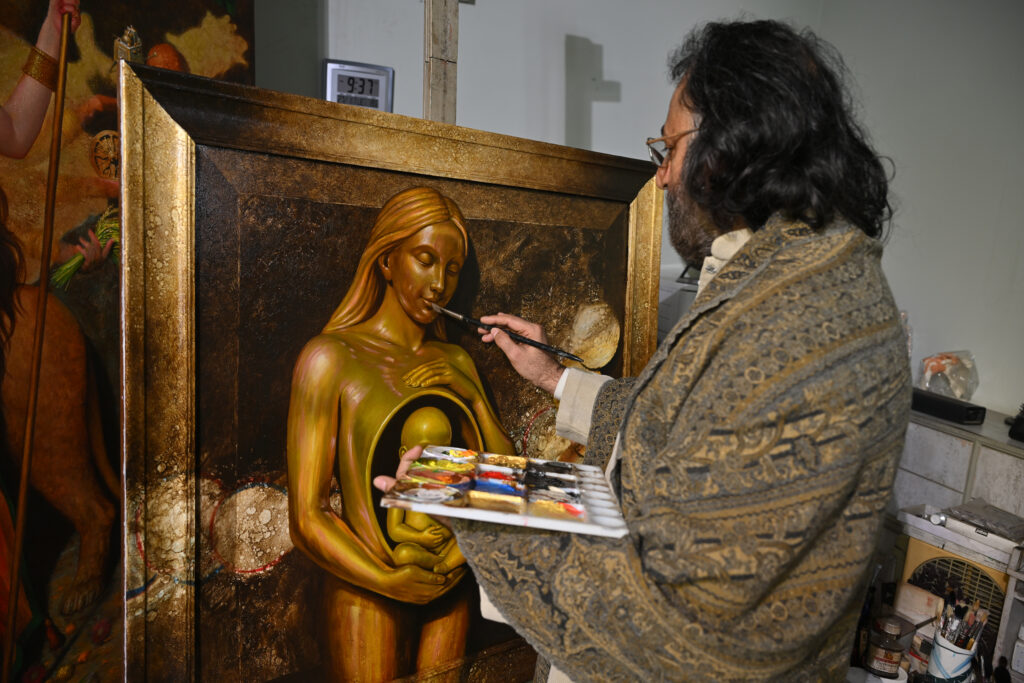
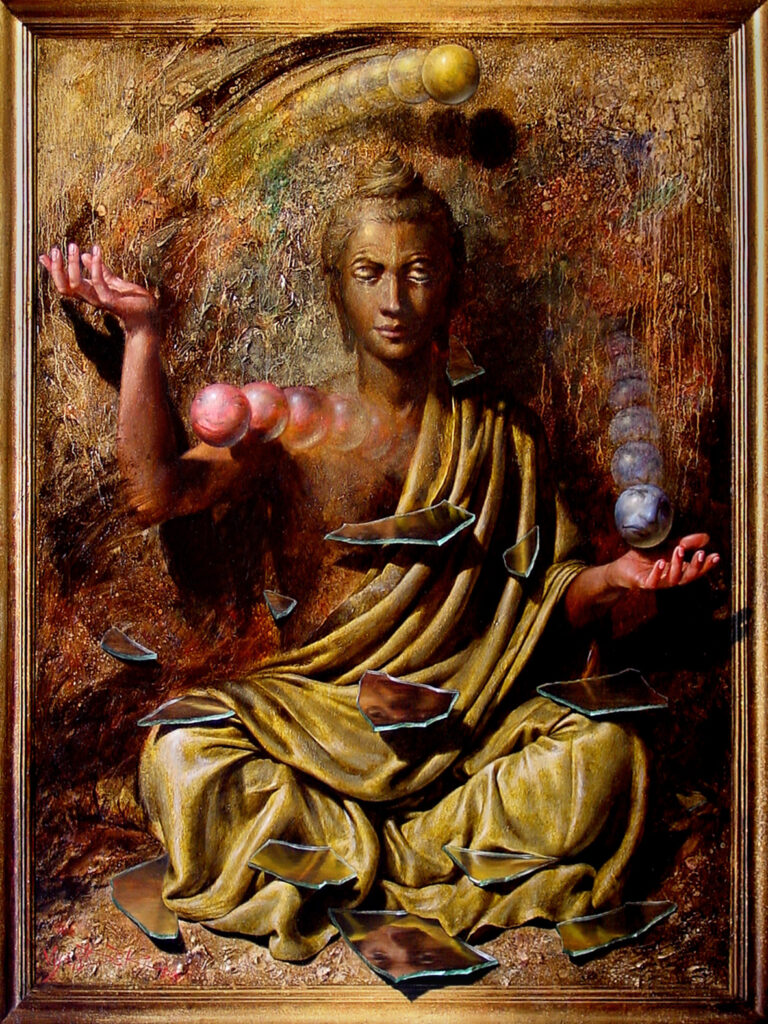
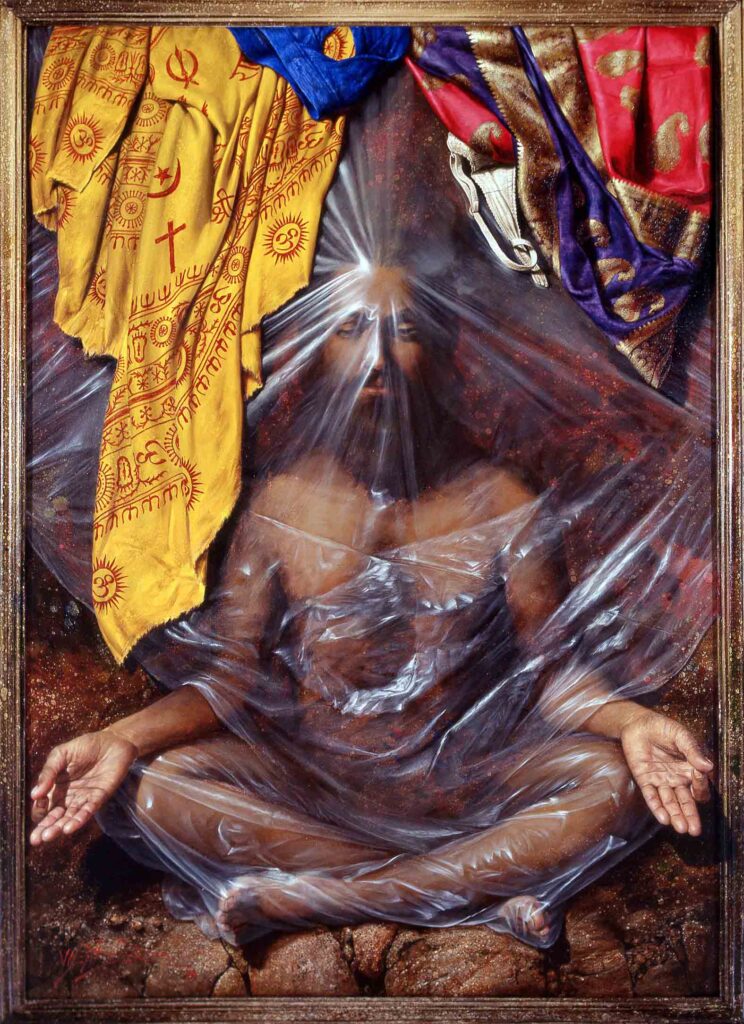
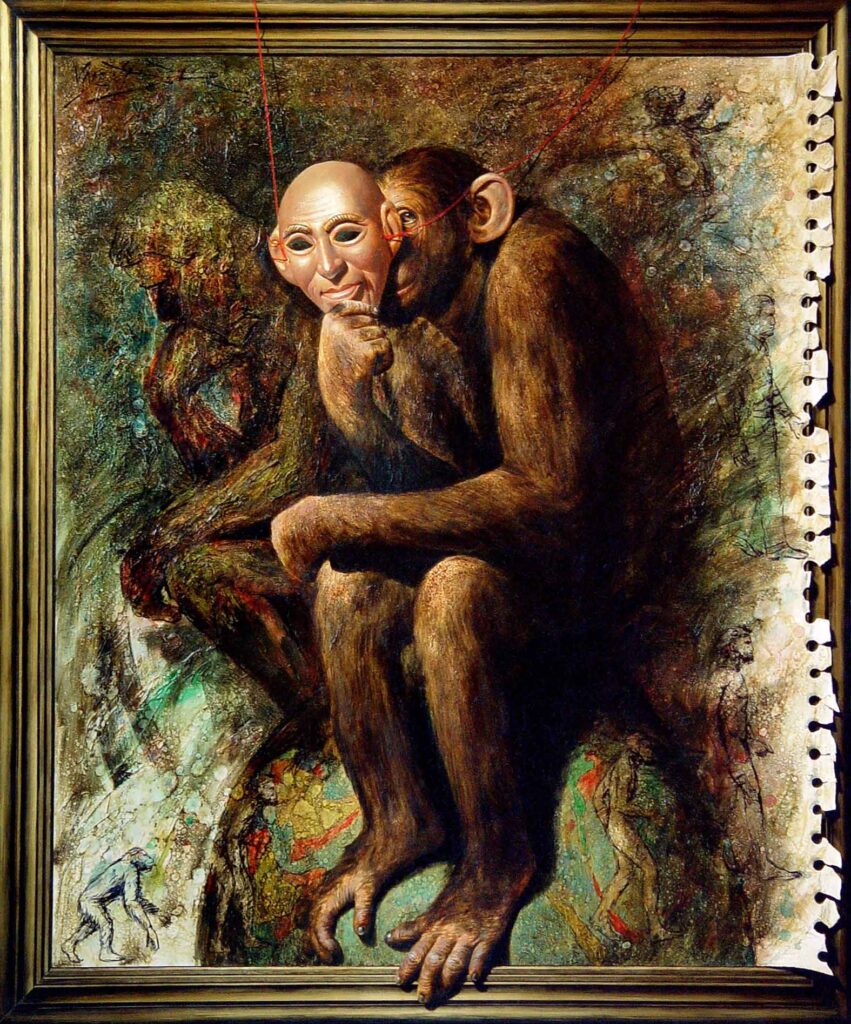
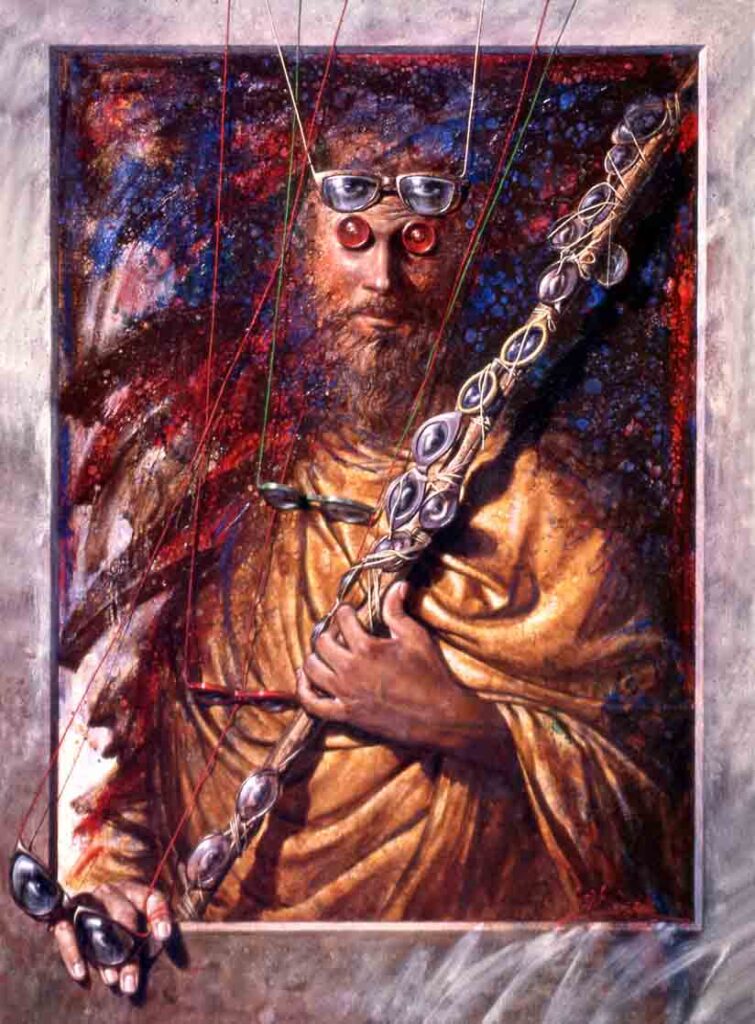
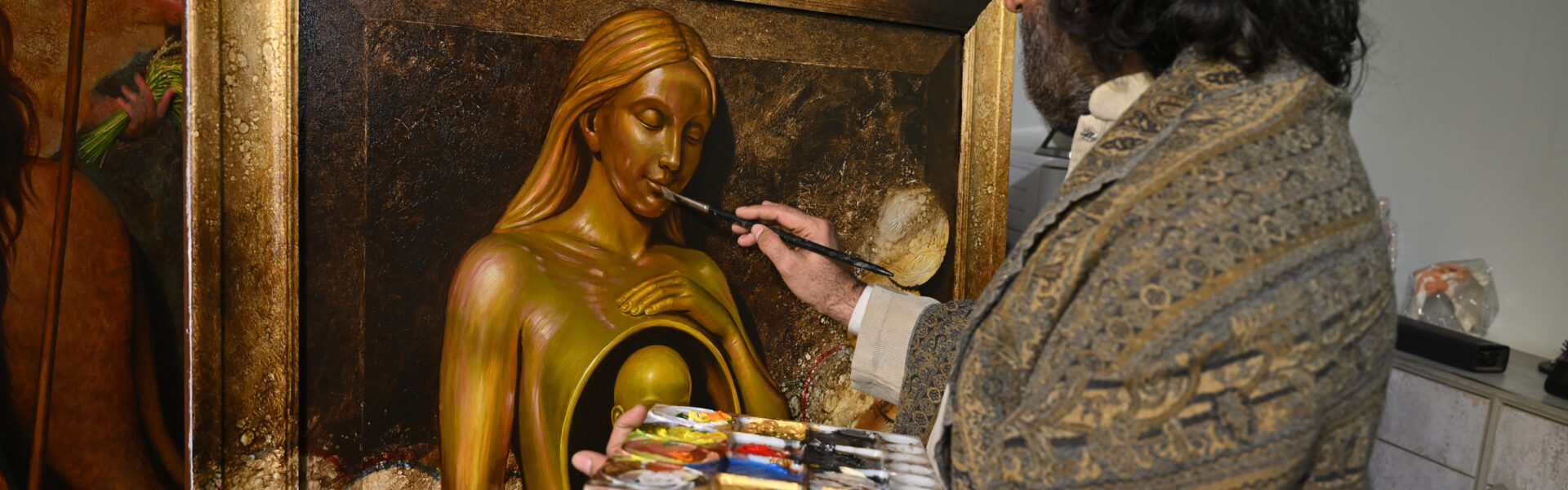
The moment you enter Vijendra Sharma’s house and his place of work, which is full of paintings and brushes, a completely different feeling surrounds you. You see the paintings, you draw your own interpretations.
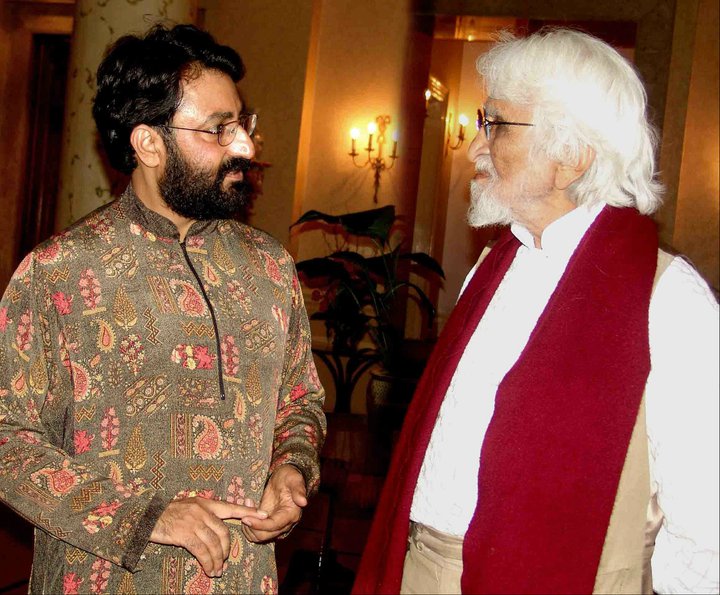
One of the paintings that I saw, and I joked with him that it looks like somebody is going to do a passion-related crime. He laughed. The painting was of a female who was holding one flower in one of her hands and one knife in the other hand. That depicted a lot of emotion inside me. It is true with all of his paintings. One of the M. F. Hussain painting, he offered a powerful lens to observe it closely. And when you observe it closely, it looked so real. Every part of his face was so beautifully depicted that it looks like that you’re seeing a real M. F. Hussain.
And that’s the power and magic of Sharma’s painting and his creations.
Vijender Sharma is a renowned Indian painter known for his surrealist and classical-style artworks. Born in 1962, Sharma earned his Master’s in Fine Arts with distinction from the College of Art, New Delhi, in 1990.
He’s contributed paintings to notable TV serials like B.R. Chopra’s “Mahabharata” and Ramanand Sagar’s “Ramayana”
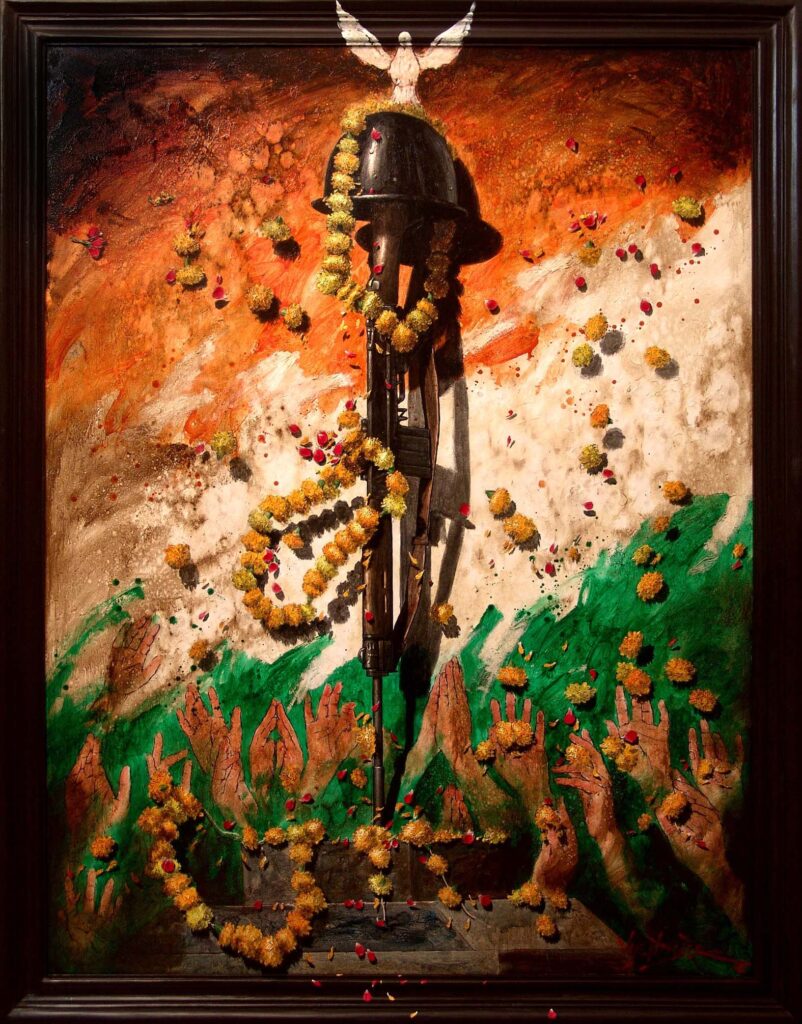
Sharma’s artworks often explore themes of love, death, spirituality, corruption, and hypocrisy. His paintings have been showcased in solo and group exhibitions across India and internationally. Some notable exhibitions include “Balance of Life” at Shridharani Art Gallery in 2008 and “Inner Voices” at Lalit Kala Akademi in 2014.
Sharma is very unlike a traditional artist, he works on his fitness daily, takes out time to paragliding and sailing and the dreadful Sword Swallowing.
This fearlessness has kept him in good stride during the intense struggle as a signboard board painter.
The fearlessness is his hallmark, for peace and tranquility he often goes to a crematorium often lying there\, sleeping there with only chirping of birds as company. He says, its a complete peace, a sense of being there, yet not being there . When you lie above a burial.. you are also dead as you sleep, for sometime. The dead and gone, some remembrance are of 1700 or 1802, yet it seems so fresh, as if they were living till yesterday.
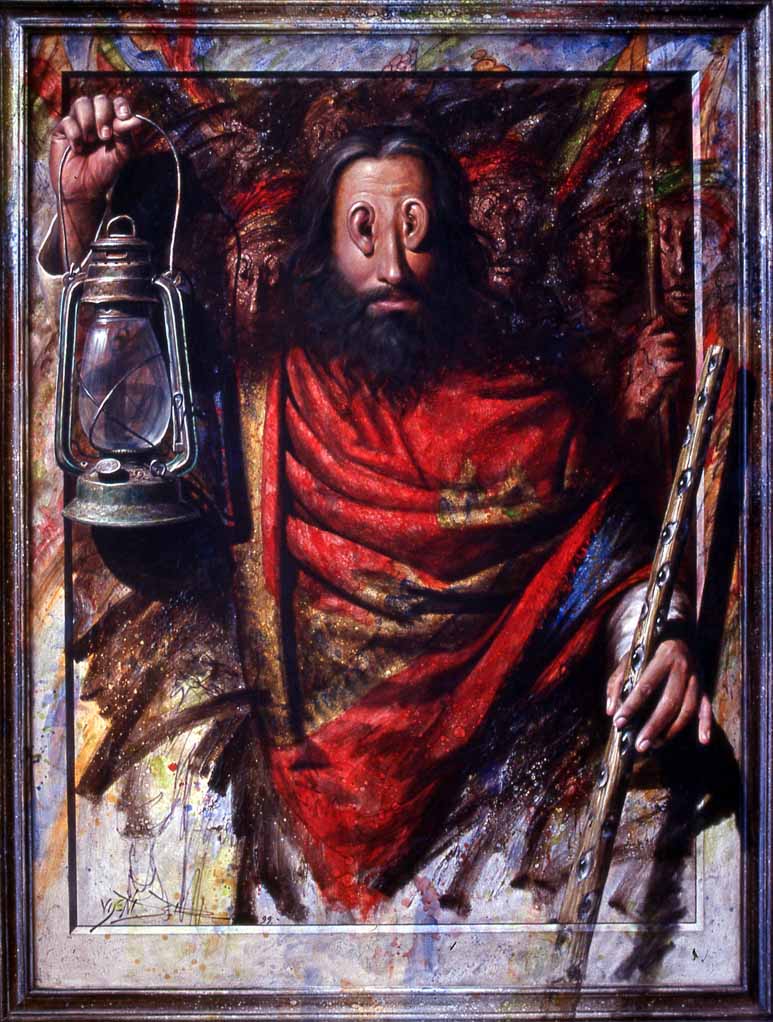
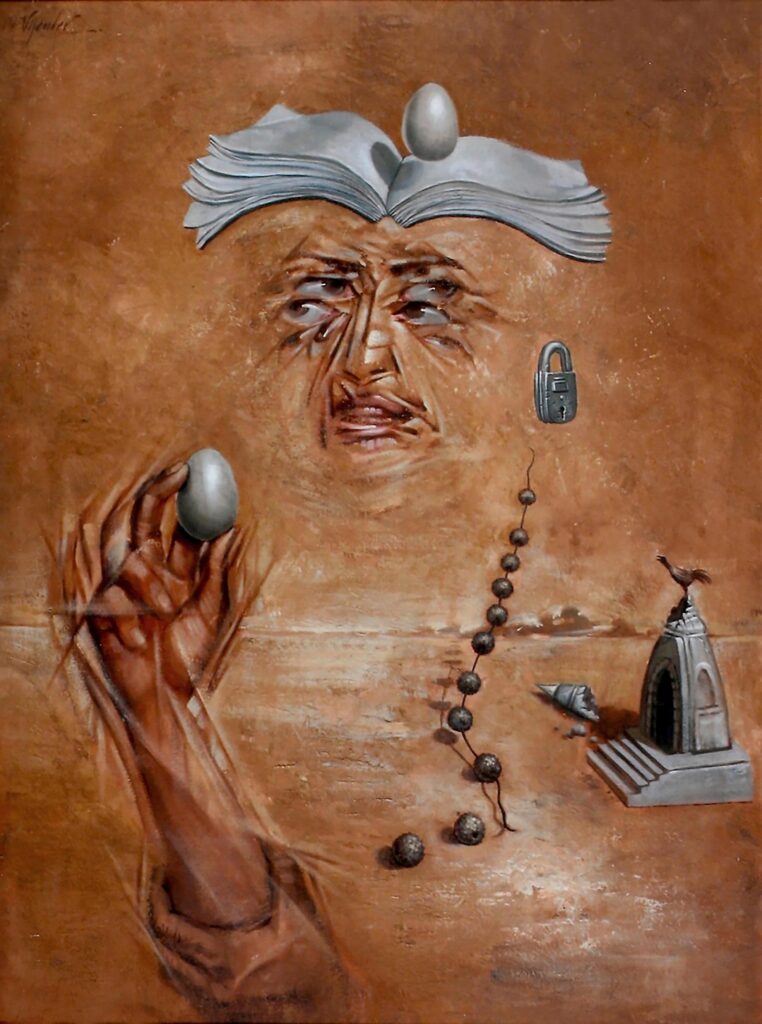
Vijender Sharma’s painting style blends classical and surrealist elements, often incorporating symbolism and realism. His works explore themes like love, death, spirituality and hypocrisy, showcasing a unique blend of traditional and contemporary influences.
Sharma’s classical training is evident in his attention to detail and realistic depictions.
He often incorporates dreamlike, symbolic elements, adding depth and complexity to his works.
His paintings frequently explore philosophical and social themes, inviting viewers to reflect.
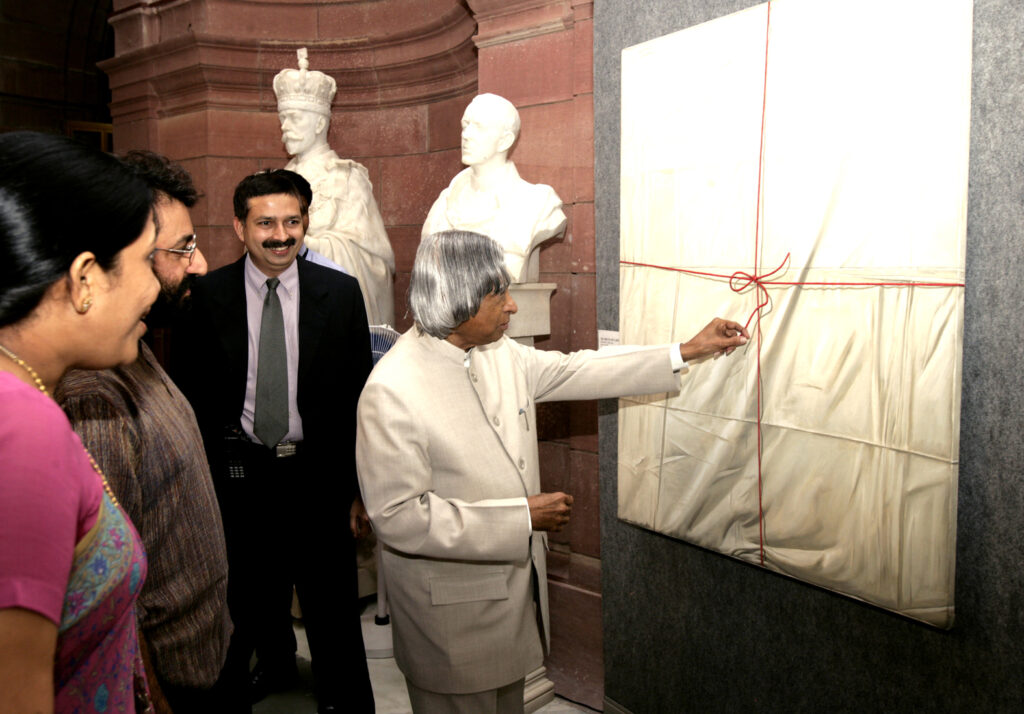
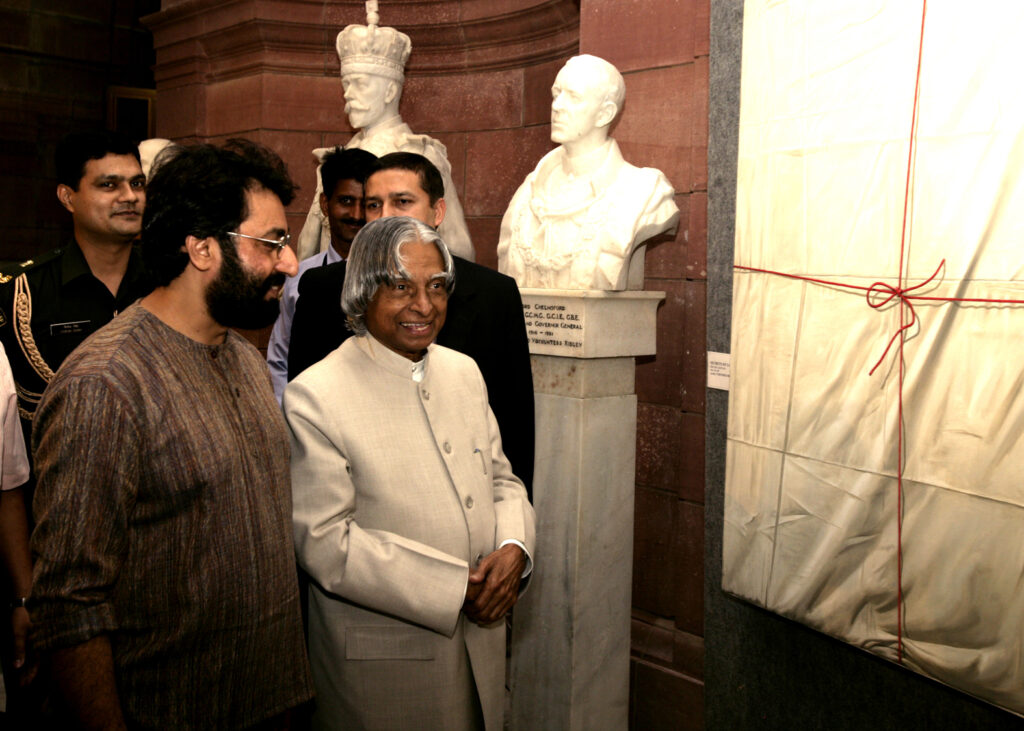
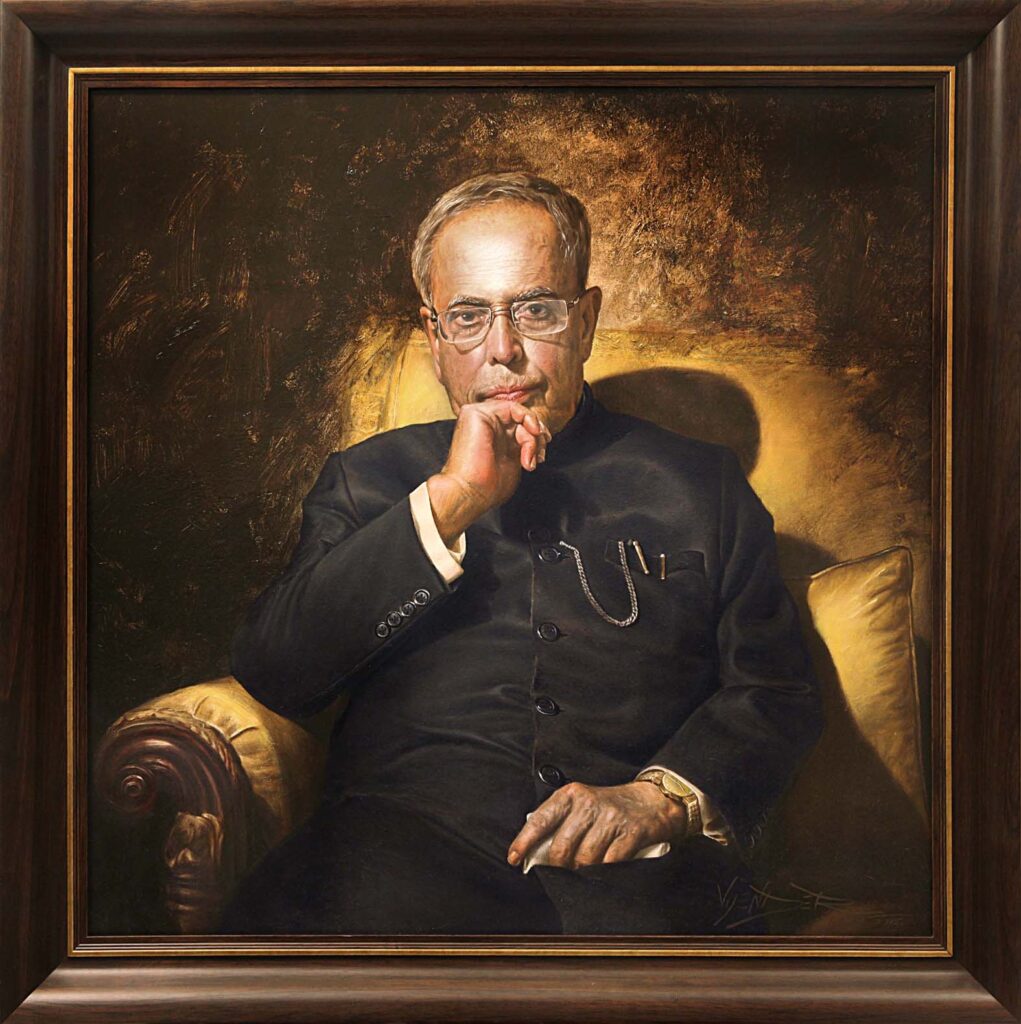
He’s received several awards, including the Artist of the Year award. His works are part of prestigious collections, including the Rashtrapati Bhawan and private collections worldwide.
As written earlier, Vijendra Sharma has also contributed artworks to notable TV serials like B.R. Chopra’s “Mahabharata”, Ramanand Sagar’s “Ramayana”, and “Vikram aur Vaital”. His work showcases a blend of classical and modernity.
He has drawn inspiration from unconventional settings, including funeral grounds. His experiences in such spaces have influenced his work, often exploring themes of mortality and the human condition.
Sharma’s time in cremation grounds has been transformative, shaping his artistic vision and informing his use of symbolism.
His paintings often feature elements like cremation pyres, skeletons, and other motifs that reflect his fascination with life’s transience.
Vijender Sharma started his career as a signboard painter, creating hand-painted signs for shops and businesses. This experience shaped his artistic skills, teaching him attention to detail and bold, clear brushwork.
Key takeaways from his time as a signboard painter:
Developed technical skills: Sharma honed his painting techniques, learning to work efficiently and effectively.
Built a portfolio: His signboard work showcased his style, leading to more opportunities.
Vijender Sharma’s experiences in Mumbai have significantly influenced his artistic journey. The city’s vibrant energy, contrasts, and complexities have inspired his work, often exploring themes of urban life, human emotions, and social realities.
* Desire Series: Exploring human longing through surrealist imagery.
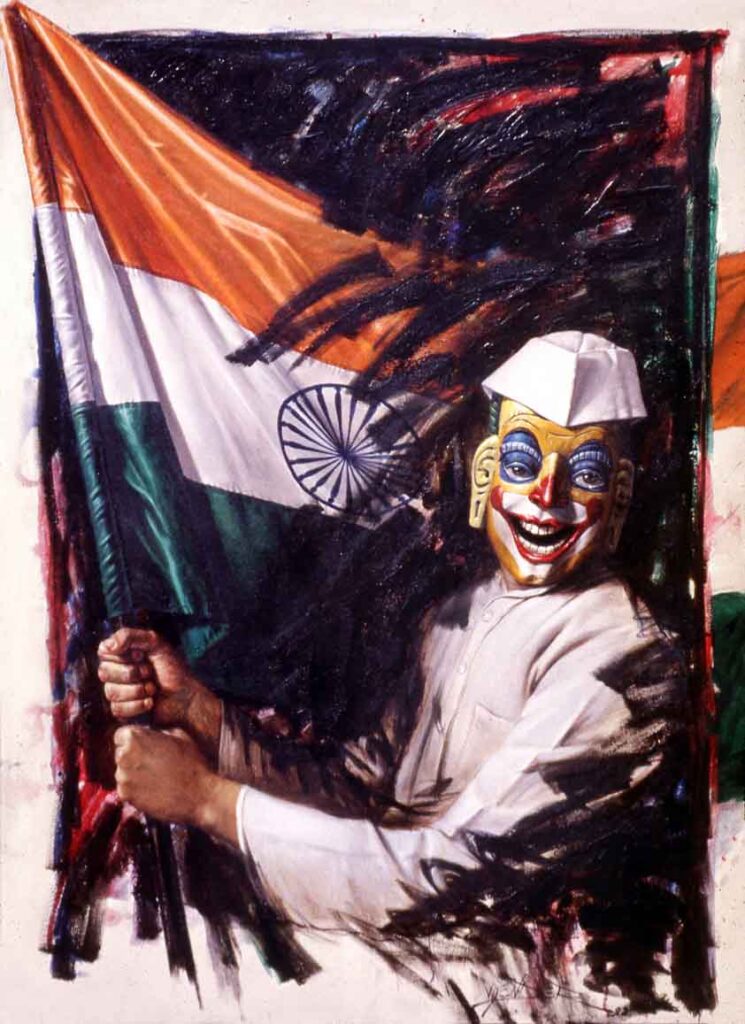
* The Mask Player: A commentary on the different faces people wear in society.
* Solving the Puzzle of Life: Intricate, large-scale canvases depicting philosophical struggles.
The Mumbai Connection:
We asked him about his visits to Mumbai, and he was visiting Mumbai quite a lot during his Bachelor of Fine Arts days. He was almost going four days a week to Mumbai. He got close to B. R. Chopra and Ramanand Sagar. He created a lot of work for series like Vikram and Behtal, Mahabharat, and Ramayya. This journey shaped him as an artist. B. R. Chopra even offered him to stay in Mumbai, which he thought about it, but later on decided to pursue his artistic career in Delhi only. Only after doing this sabbatical in Mumbai, he did his master in Fine Arts in Painting only, getting a distinction and a gold medal from College of Art, Delhi.
Whether Mumbai would have made him a different person, when asked, he said he wanted to pursue his art in an independent fashion without any directions from anybody.
About a query on staying back in Mumbai when he was going to Mumbai during his Bachelor of Fine Arts programme in Delhi. He said he thought about it and as he worked with various people at that point of time, including B.R. Chopra, and Ramanand Sagar. He created a lot of works in serials like Mahabharat, Ramayan, and Vikram and Vetal. Whether a stay in Mumbai or a journey in Mumbai, would have changed his course of life, …. he said he wanted to create his own thought process, put the inner thoughts through colours as a creation, not binded by what was directed to him by others.
Mumbai has served as a primary commercial and exhibition hub for Sharma’s career. His experience in the city is marked by:
* Elite Patrons: His work is heavily collected by Mumbai’s most prominent families and corporations, including Mukesh Ambani, Tina and Anil Ambani (Reliance), Harsh Goenka (RPG Group), and the Godrej family.
* Key Exhibitions: He has been a regular fixture at the Jehangir Art Gallery and the Nehru Centre in Mumbai. He gained significant recognition through the Harmony Show (hosted by the Ambani family), where he was named “Artist of the Year” in 2003.
Played a foundational role in the visual identity of India’s most iconic mythological television series.
His “experiences” with Ramanand Sagar and B.R. Chopra were as a painter and visual consultant, providing the artwork that brought the epics to life before CGI became the standard.
Contribution to the Epics
During the late 1980s, while still a student at the College of Art in New Delhi, Sharma’s talent for “Magical Realism” caught the attention of the titans of Indian television.
While writers like Rahi Masoom Raza and Pandit Narendra Sharma penned the dialogues, Vijendra Sharma “wrote” the visual prologue. For millions of viewers, the first image they saw when the theme music started was a Sharma masterpiece. These paintings didn’t just illustrate a scene; they captured the “Bhakti” (devotion) that Ramanand Sagar and B.R. Chopra wanted to instill in the audience
“Vikram Aur Betaal” was primarily behind the scenes as a painter and visual artist.
While the show is famous for its storytelling and the performances of Arun Govil and Sajjan, Sharma’s work provided the aesthetic foundation for its mythical world.
His Role in “Vikram Aur Betaal”
During the early stages of his career in the 1980s, Sharma was commissioned by Ramanand Sagar to create paintings and visual artworks for the series.
* Set Design & Visuals: He contributed specific paintings used within the show’s production to enhance the mythological and supernatural atmosphere.
* Title & Promotional Art: His realistic and surrealist style helped define the “look” of the legendary characters, King Vikramaditya and the celestial spirit Betaal, for television audiences.
•
Other Major Television Works
Beyond Vikram Aur Betaal, Sharma’s realistic art style was highly sought after by the pioneers of Indian mythological television:
* **Mahabharat (B.R. Chopra): He contributed significant artwork and paintings that helped visualize the epic’s vast scale.
* **Ramayan (Ramanand Sagar): He worked on visual elements and paintings for this landmark series as well.
Famous for his Contemporary Realism and has gained international acclaim for his portraits and surrealist canvases.
* Notable Achievement: He was commissioned to paint the official portrait of Dr. A.P.J. Abdul Kalam for Rashtrapati Bhawan.
* Style: His work often bridges the gap between spiritual fantasy and human reality, a skill he honed while working on the mythological epics of Indian TV.
Vijender Sharma’s work with Madhuri magazine (a popular Hindi film fortnightly published by The Times of India Group) was a cornerstone of his early career in the 1980s.
Before becoming a world-renowned contemporary painter, he was a prolific illustrator and cover artist. Here is how he contributed to the magazine:
1. Iconic Cover Portraits
Sharma was famous for his hyper-realistic oil and acrylic paintings of Bollywood stars that graced the covers of Madhuri. At a time when digital photography was not as dominant for cover art, his hand-painted portraits
As an artist, who struggled, came from nowhere, did not know the ways of world, his fearlessness defines him, enduring and enjoying his struggle defines him, as he puts it struggle made me , what i am today , it polished me so much .
“Art is nothing but manifestions of our Inner self through colours “.
A life well lived, well fought, brilliantly displayed through magic works, yet a song by Rafi Saheb depicts his life journey so well…
Mai zindagi ka saath nibhata chala gaya, harek fikr ko due mein udata chala gaya….
Jo mil gaya usi ko muqaddar samajh liya ….
Jo kho gaya main usko bhulata chala gaya….
Gham aur khushi mein fark na mehsoos ho jahan….
Main dil ko uss muqaam pe laata chala gaya…
This sums up his courage, fascinating journey of brilliance with colours.