Forging Form from Earth and Fire Vipul Kumar
The Alchemetic Journey of Clay
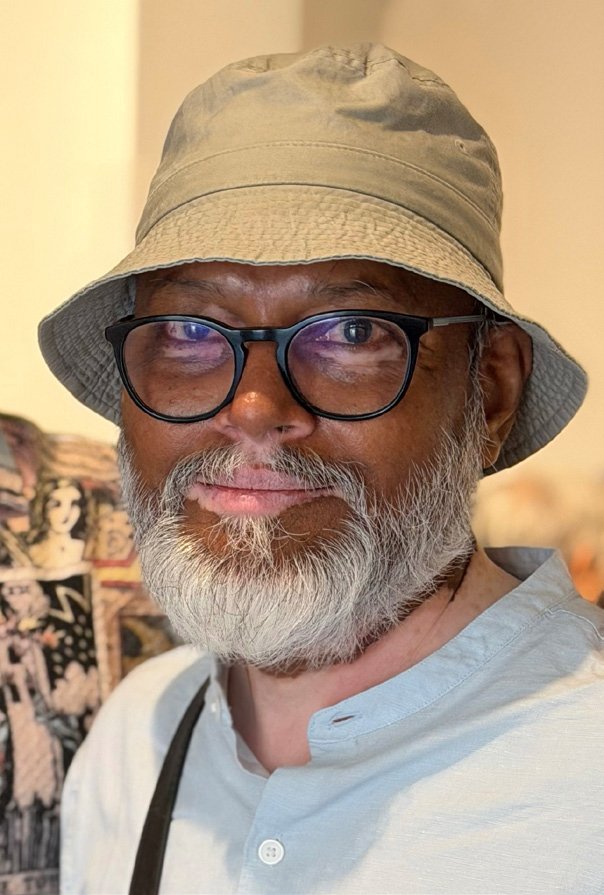
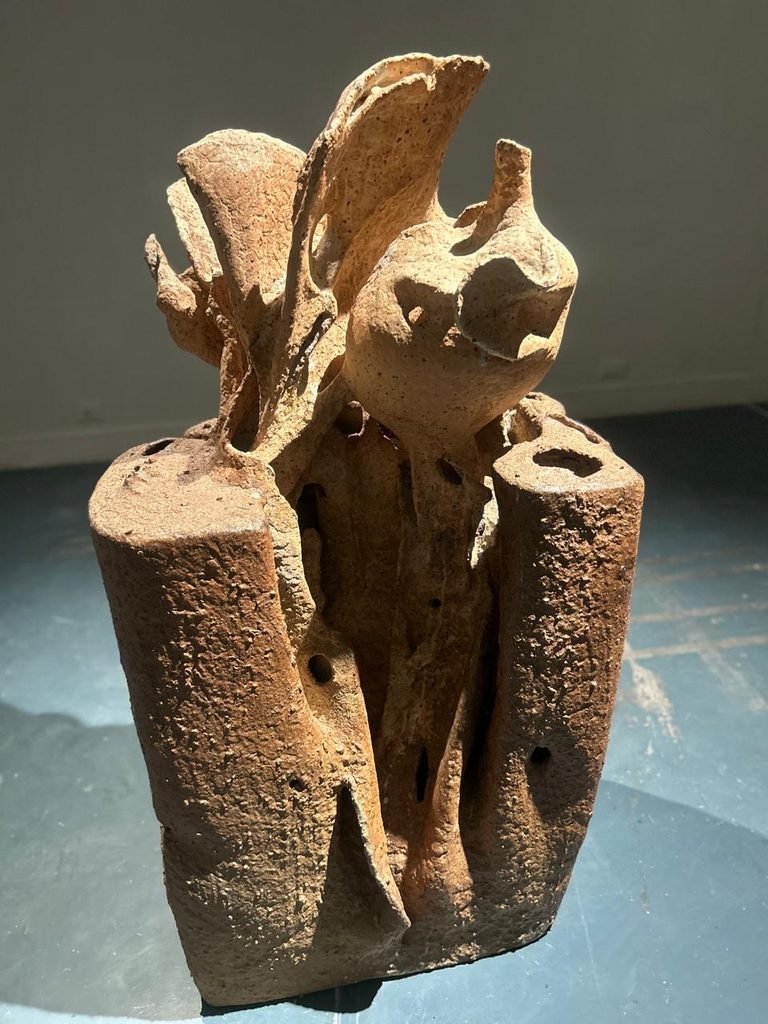
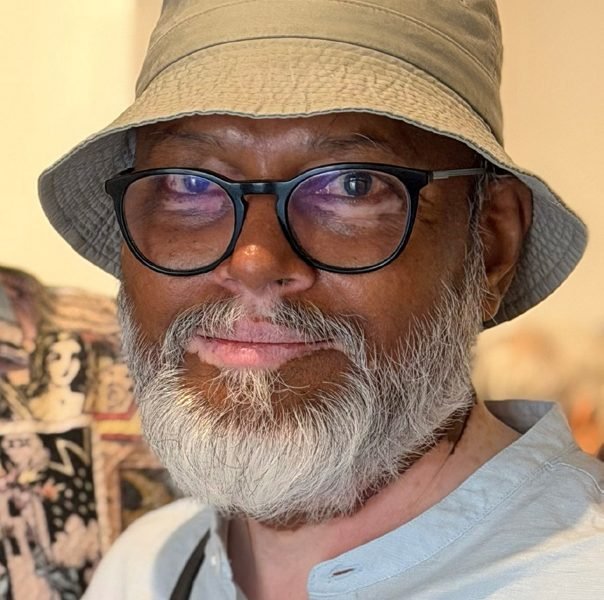
In the landscape of contemporary Indian art, few practitioners command space and material with the raw, elemental authority of ceramic sculptor Vipul Kumar. Born in 1970 and trained under the rigorous mentorship of stalwarts like Balbir Singh Katt and Himmat Shah, Kumar earned his Master of Fine Arts in Sculpture from Banaras Hindu University in 1995. Over a career spanning three decades, he has rejected the boundaries that traditionally segregate craft from high art, establishing clay and stoneware not merely as mediums for utility or decorative delicacy, but as vehicles for profound philosophical inquiry. Operating far from the frenetic pace of metropolitan art districts—typically working out of his studio near a black marble quarry region close to Jaipur—Kumar’s practice is rooted in isolation, intense physical labor, and an intimate dialogue with nature. His work investigates the cyclical relationship between the environment, human intervention, and geological time. This artistic philosophy found its most striking contemporary expression in his solo exhibition, “Tap aur Tapish” (तप और तप�श), presented by Art Explore and curated by renowned artist Anita Dube at the CCA Building, Bikaner House, New Delhi, running from September 14 to September 21, 2026.
From Stone to Stoneware: The Evolution of Materiality
To understand Kumar’s ceramic sculptures, one must first understand his origins as a stone carver. Early in his career, he participated in national stone sculpture camps and international symposia, grappling with the unyielding resistance, immense weight, and stubborn density of stone. When he eventually transitioned toward clay and stoneware, he brought this heavy-handed, monumental sensibility with him.
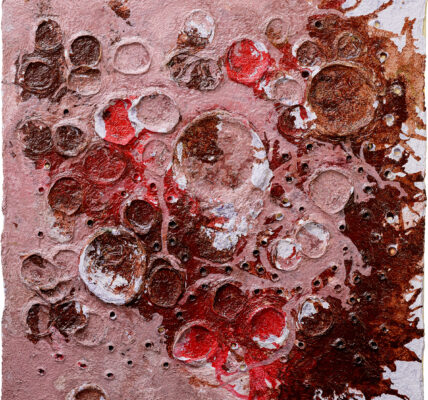
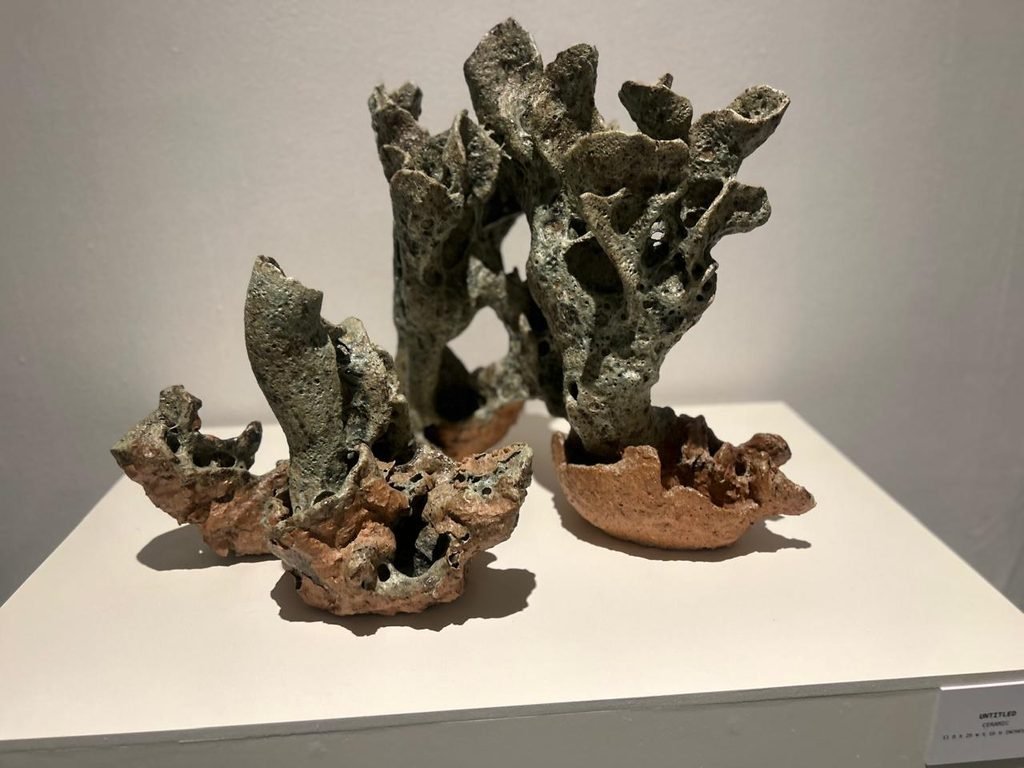
Unlike many ceramicists who revel in the smooth, wheel-thrown perfection of functional pottery, Kumar works on an architectural scale. His sculptures—often sprawling, highly porous, and aggressively asymmetrical—resemble ancient ruins, archaeological fragments, or geological formations weathered by centuries of wind and rain. They possess a tactile skin that records the violence and tenderness of creation.
His artistic process is deeply physical. He views the four classical elements not as passive backdrop, but as active collaborators:
- l Earth (Clay): The raw, vulnerable skin extracted from the ground.
- l Water: The binding agent that grants temporary plasticity to the dust.
- l Air: The drying medium that hardens the vulnerable form before judgment.
- l Fire (Tapish): The transformative, unforgiving heat of the kiln that permanently locks the structure into bone-like strength.
As curator Anita Dube poetically noted during his recent showcase, Kumar’s sculptures successfully transform “the fragility and tenderness of wet clay into a fired strength of bone”.
Tap aur Tapish: The Bikaner House Exhibition
The exhibition “Tap aur Tapish” at Bikaner House served as a definitive milestone in Kumar’s career, bringing together a massive body of recent works that encapsulate his artistic maturation. The title itself acts as a conceptual roadmap: Tap (तप) refers to deep meditation, austerity, and sustained, lifelong discipline, while Tapish (तप�श) denotes the searing, transformative heat of the kiln. Together, they summarize both the inner state of the maker and the physical trial of the medium.
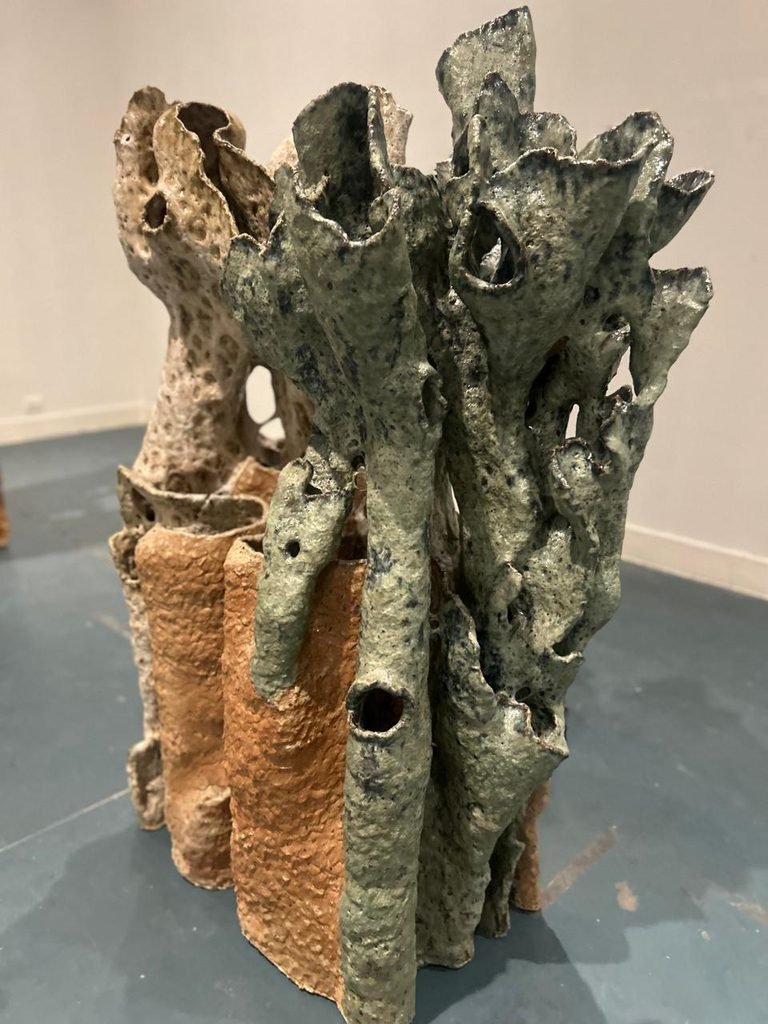
Stepping into the CCA Building at Bikaner House felt less like entering a conventional white-cube gallery and more like stepping into a subterranean excavation site. The exhibition space was meticulously organized to reflect the atmosphere of Kumar’s rural studio. Raw elements—dry earth, unworked clay blocks, primitive tools, and towering finished monoliths—coexisted within the same spatial field.
Scale and Spatial Presence
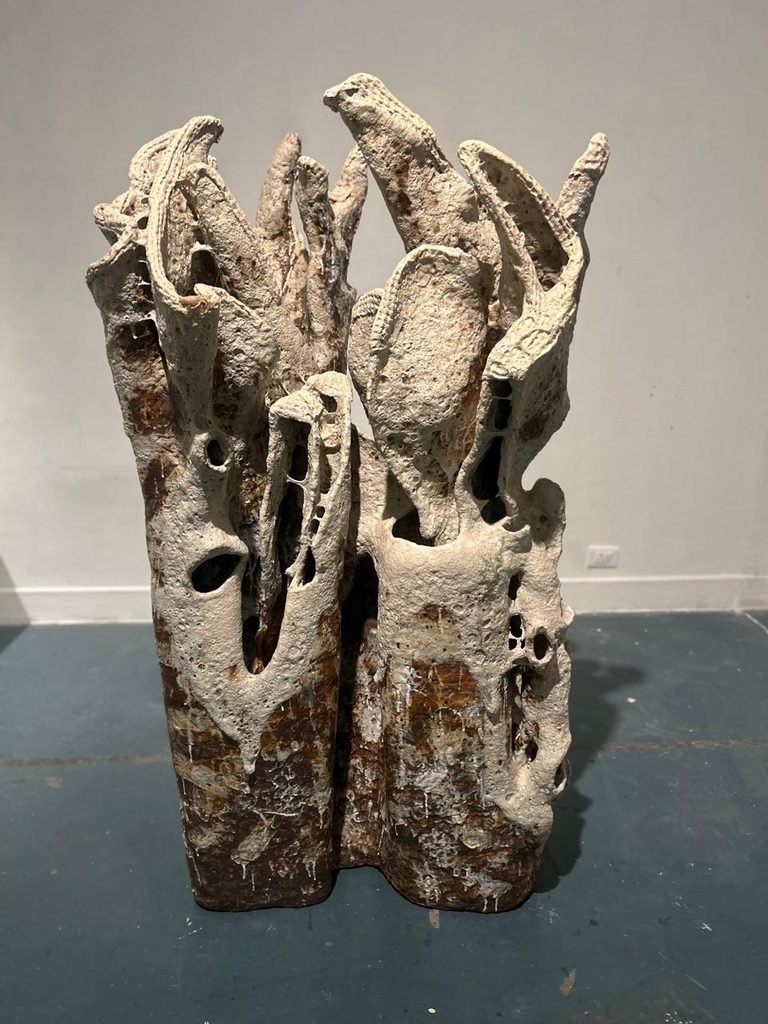
What immediately struck visitors was the sheer scale of the works. In contemporary Indian ceramics, few artists dare to push spatial boundaries the way Kumar does. His sculptures stood tall, demanding physical navigation from the viewer. They commanded the high ceilings of Bikaner House, casting dramatic shadows and altering the architectural acoustics of the hall.
The surfaces of these stoneware sculptures were heavily textured—fissured, pitted, and layered with volcanic glazes and earthy oxides. Rather than hiding the imperfections or structural strains inherent to firing massive bodies of clay, Kumar accentuated them. Cracks, warps, and rugged edges were left exposed, serving as testaments to the dialogue between the artist’s will and the independent behavior of the material under extreme heat.
Conceptual Underpinnings: Ecology and Resilience
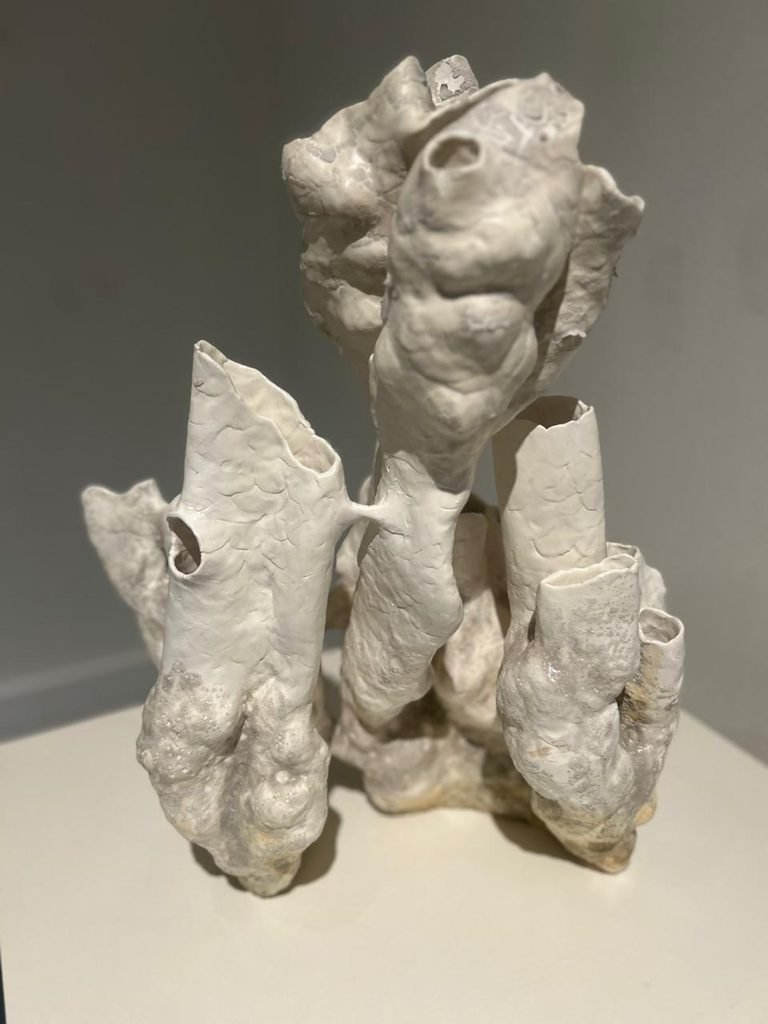
Beyond their formal brilliance, the works presented in Tap aur Tapish carried a heavy ecological undertone. Kumar has long expressed deep concern over ecological degradation, habitat loss, and the aggressive urbanization of natural landscapes. However, his sculptures do not evoke despair; rather, they echo nature’s quiet, stubborn resilience.
Like ancient trees that have survived wildfires or stone cliffs eroded by rushing rivers, Kumar’s ceramics look as though they have endured a lifetime of hardship. They project a silent dignity, communicating his oft-repeated belief that nature is ultimately “patient, adaptable, resilient, and forgiving”.
Conceptual Underpinnings: Ecology and Resilience
Beyond their formal brilliance, the works presented in Tap aur Tapish carried a heavy ecological undertone. Kumar has long expressed deep concern over ecological degradation, habitat loss, and the aggressive urbanization of natural landscapes. However, his sculptures do not evoke despair; rather, they echo nature’s quiet, stubborn resilience.
Like ancient trees that have survived wildfires or stone cliffs eroded by rushing rivers, Kumar’s ceramics look as though they have endured a lifetime of hardship. They project a silent dignity, communicating his oft-repeated belief that nature is ultimately “patient, adaptable, resilient, and forgiving”. In an era dominated by digital ephemera and rapid technological acceleration, Kumar’s heavy, slow-baked earth monuments compelled Delhi’s audiences to stop, look down, and contemplate deep time.
Critical Reception and Cultural Legacy
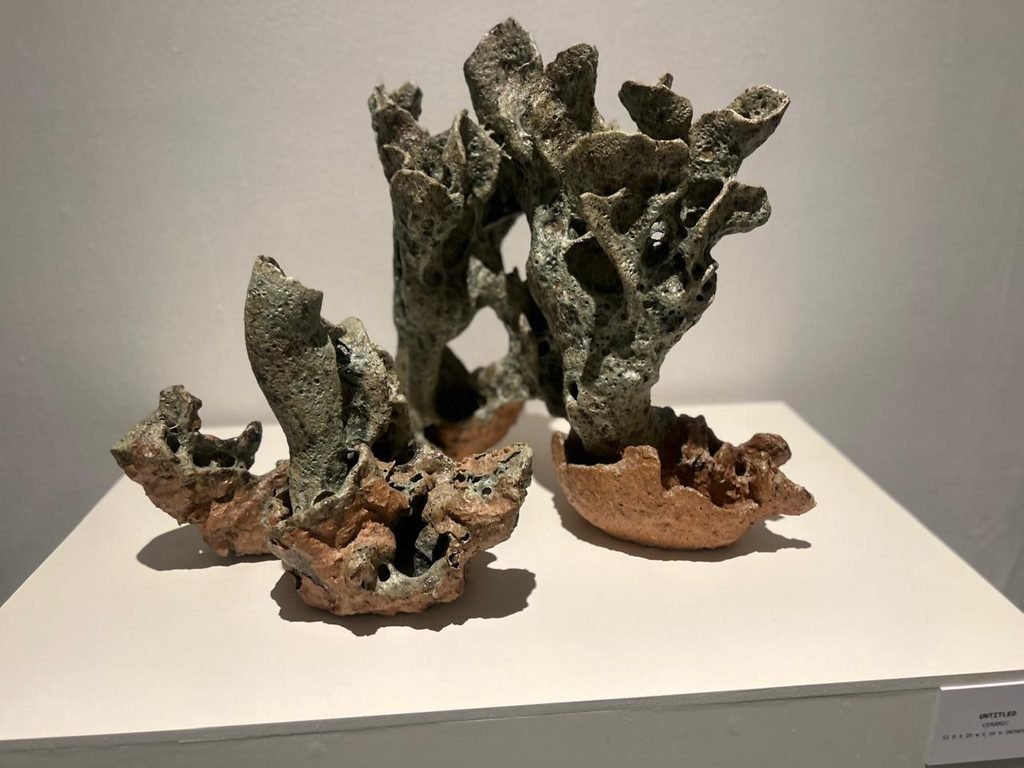
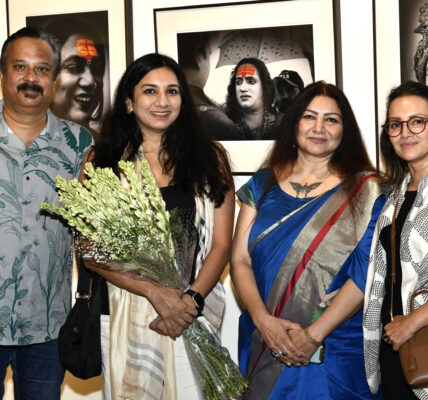
The opening of Tap aur Tapish drew a diverse cross-section of Delhi’s cultural elite, including prominent artists, diplomats, collectors, and gallerists. The exhibition reinforced the growing recognition of ceramics as a major force in contemporary Indian sculpture—a shift that institutions and foundations, such as the Contemporary Clay Foundation and events like the Indian Ceramics Triennale, have increasingly championed.
Kumar’s inclusion in prestigious collections—ranging from public installations at the Mumbai International Airport to private holdings across the country—cements his status as a pillar of modern Indian sculpture. Yet, he remains remarkably detached from the commercial noise of the art market. His allegiance lies entirely with the rhythm of the kiln, the texture of the soil, and the meditative quiet of his workspace.
Conclusion
Vipul Kumar’s exhibition at Bikaner House was a masterclass in material honesty and conceptual depth. Through Tap aur Tapish, he reminded the contemporary art world that true innovation does not always require new technologies or digital mediums; sometimes, it requires returning to the oldest substance known to civilization—earth—and subjecting it to the unyielding trial of fire. In doing so, Kumar has carved out a singular, enduring space for himself, transforming humble mud into timeless poetry.