The Living Language of Folk Tradition in the Contemporary Art of Hariom Kuthwaria
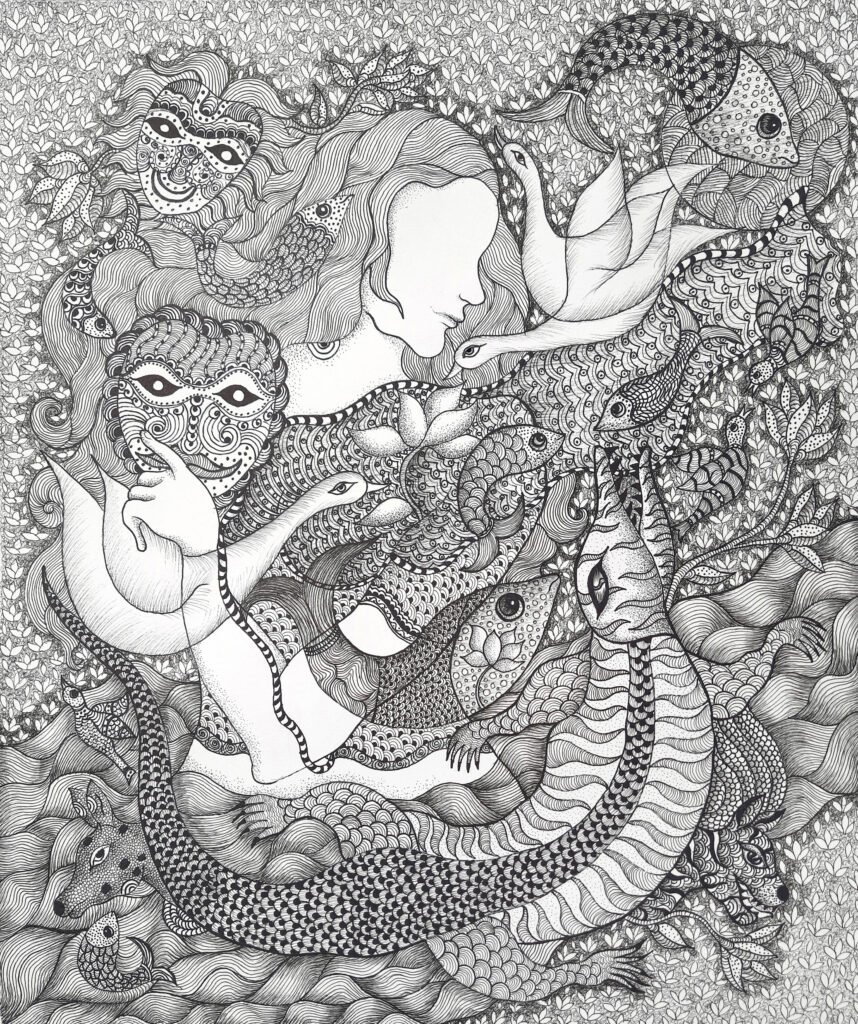
In an age marked by rapid urbanization, technological acceleration, and environmental uncertainty, art often serves as a vital space for reflection and reconnection. For Delhi-based visual artist Hariom Kuthwaria, art becomes a bridge between tradition and modernity, memory and imagination, humanity and nature. Rooted in the visual vocabulary of Indian folk traditions—particularly Gond art—yet deeply engaged with contemporary concerns, his paintings celebrate the enduring relationship between humans, animals, and the natural world.
Artistic expression, according to Kuthwaria, revolves around three essential dimensions: nature, social relationships, and human emotions. These interconnected themes form the foundation of his artistic practice. Through vibrant compositions, rhythmic patterns, and symbolic imagery, he seeks to communicate positivity, harmony, and emotional depth. His works are not merely visual experiences; they are invitations to contemplate coexistence, ecological balance, and the cultural values that have shaped Indian civilization for centuries.
Nature as a Living Presence
Reverence for nature has always occupied a central place within Indian philosophy and cultural traditions. This profound respect for the natural world forms the cornerstone of Hariom Kuthwaria’s artistic vision. In his paintings, nature is not treated as a background element but as a living, breathing presence that actively participates in the narrative of existence.
Trees, birds, animals, rivers, flowers, and landscapes emerge as recurring symbols throughout his work. They embody not only ecological realities but also emotional and spiritual dimensions. Through flowing forms and rhythmic compositions, Kuthwaria creates visual harmonies that resemble musical movements. His paintings possess an organic cadence where every line, shape, and color contributes to a larger symphony of interconnected life.
Tradition Reimagined Through Contemporary Expression
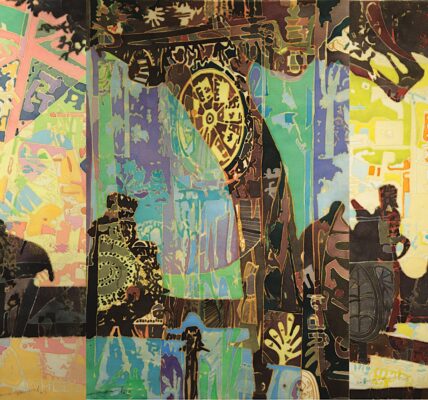
At the heart of Kuthwaria’s artistic practice lies the fusion of traditional Indian aesthetics with contemporary visual sensibilities. Drawing inspiration from folk and tribal art forms, particularly the Gond tradition, he creates works that honor cultural heritage while speaking to present-day realities.
Gond artists have historically expressed their experiences through simplified forms, intricate patterns, dynamic lines, and vivid colors. Inspired by the honesty and vitality of this tradition, Kuthwaria incorporates similar visual elements into his own contemporary framework. His compositions employ rhythmic line work, decorative motifs, and vibrant palettes to construct narratives that resonate with modern audiences while retaining the spirit of indigenous storytelling.
This synthesis of old and new allows his work to transcend conventional boundaries between folk and contemporary art. Rather than replicating traditional forms, he reinterprets them, transforming inherited visual languages into vehicles for contemporary thought and reflection.
The Visual Language of Harmony
“My art is a bridge between the ancient echoes of tradition and the vibrant pulse of the modern world,” says the artist. This philosophy is evident throughout his oeuvre, where cultural memory and contemporary consciousness coexist in dynamic equilibrium.
The Living Rhythm of Nature
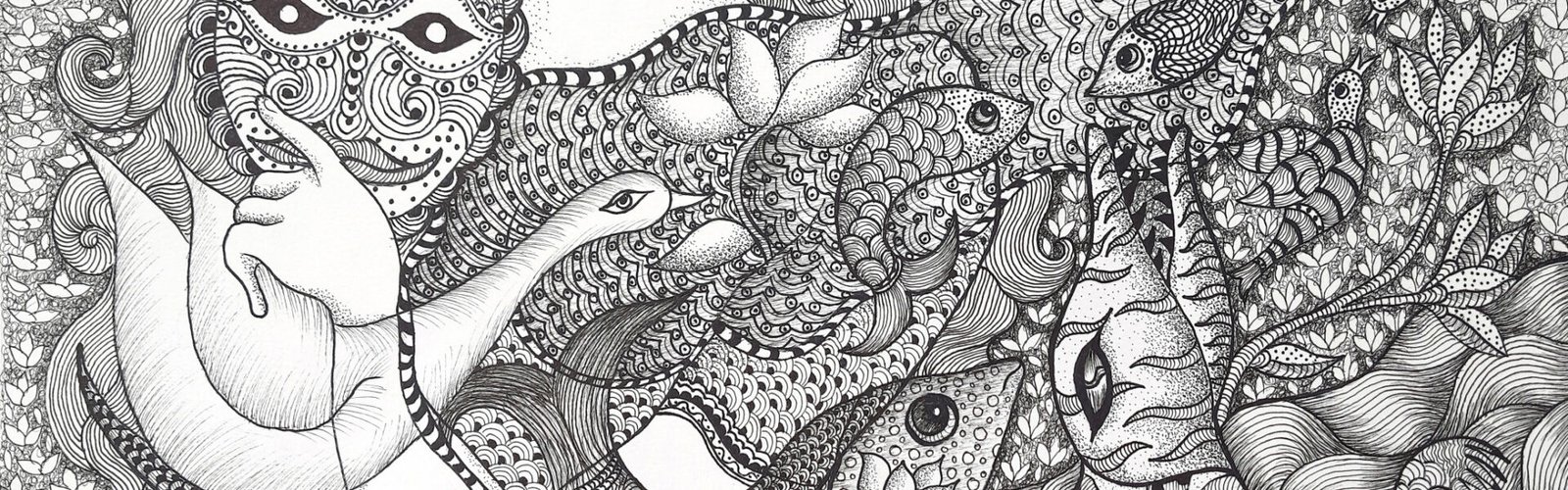
One of Kuthwaria’s most compelling works, The Living Rhythm of Nature, exemplifies his artistic vision. In this painting, animals, birds, fish, flowers, and organic forms are woven together into a flowing and unified composition. Each element maintains its individual identity while simultaneously contributing to a larger collective rhythm.
The elephant appears as a symbol of wisdom, stability, and strength. The tiger embodies vitality and courage, while the deer represents gentleness and vulnerability. Fish and aquatic motifs evoke movement, transformation, and the life-giving power of water. Together, these elements form a visual metaphor for ecological interconnectedness.
The work emphasizes the idea that every living being contributes to the larger rhythm of existence. Through carefully orchestrated patterns and harmonious relationships between forms, the painting celebrates the beauty of diversity within unity.
Lost Home in Urban Shadows
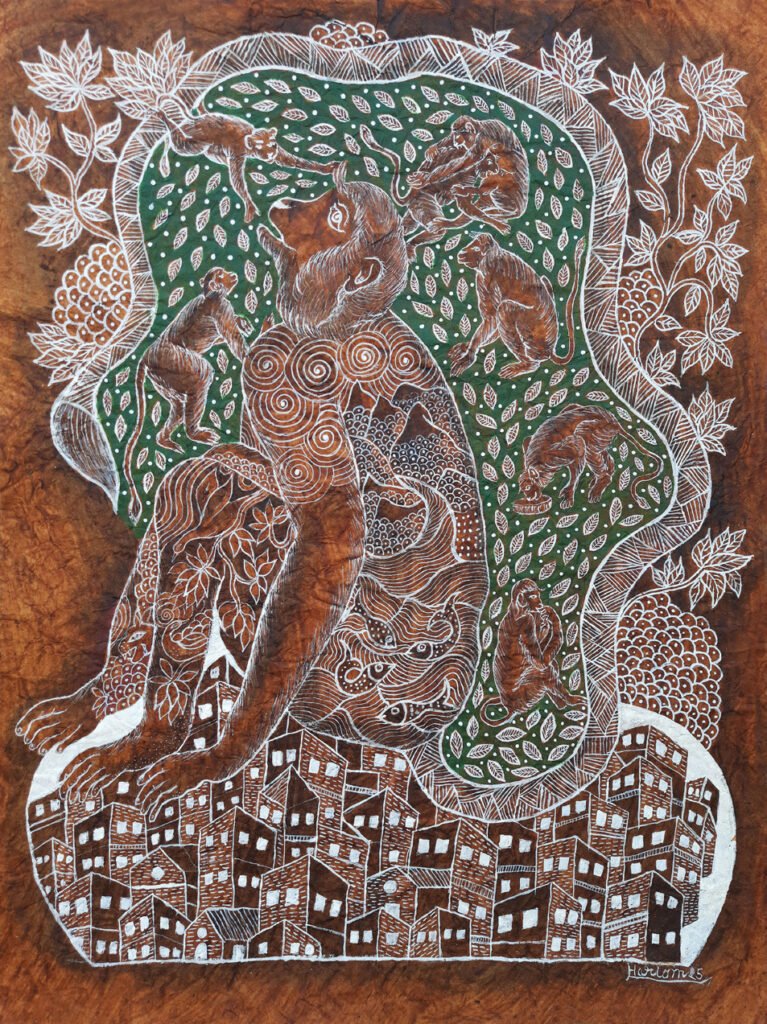
Environmental displacement and unchecked urban expansion emerge as significant concerns within Kuthwaria’s contemporary practice. These themes find powerful expression in Lost Home in Urban Shadows, a painting that examines the fragile relationship between development and nature. In this work, The body becomes a symbolic vessel within which nature continues to survive despite increasing external pressures. Animals inhabiting the figure represent voices that are gradually being silenced as urban environments expand and natural habitats diminish. At the base of the composition, densely packed architectural structures symbolize population growth, consumer ambition, and the often-unquestioned pursuit of development. Rather than rejecting progress, the painting raises an important question: What is the cost of advancement when it displaces ecosystems and erases habitats that cannot speak for themselves?
Reflection of Nature
Another significant work, Reflection of Nature, explores the spiritual and emotional connections that bind all living beings. Human consciousness, animal life, and natural elements merge into a unified composition that celebrates interdependence and harmony. The painting functions as a visual meditation on the relationship between the self and the natural world. It suggests that nature is not external to human existence but deeply embedded within it. By combining contemporary artistic approaches with the narrative richness of Gond-inspired imagery, Kuthwaria creates a poetic reflection on balance, coexistence, and ecological awareness.
Krishna – A Musician
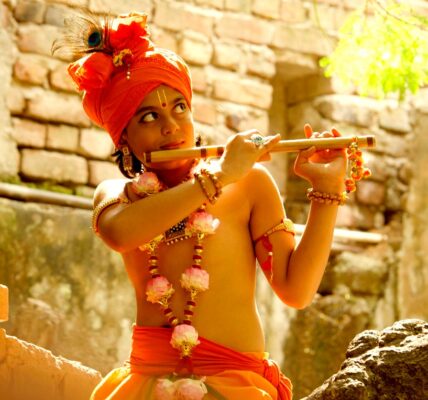
Among the artist’s spiritually inspired works, Krishna – A Musician stands out as a vibrant celebration of divine harmony. Reimagining Lord Krishna through a contemporary aesthetic infused with Gond-inspired motifs, the painting radiates rhythm, joy, and spiritual energy. The painting transcends conventional religious representation by presenting Krishna as both a divine figure and an eternal artist whose creative energy unites all forms of life. Through the fusion of folk traditions and contemporary design, Kuthwaria creates a powerful visual hymn celebrating love, creativity, and spiritual interconnectedness.
A Journey through Art
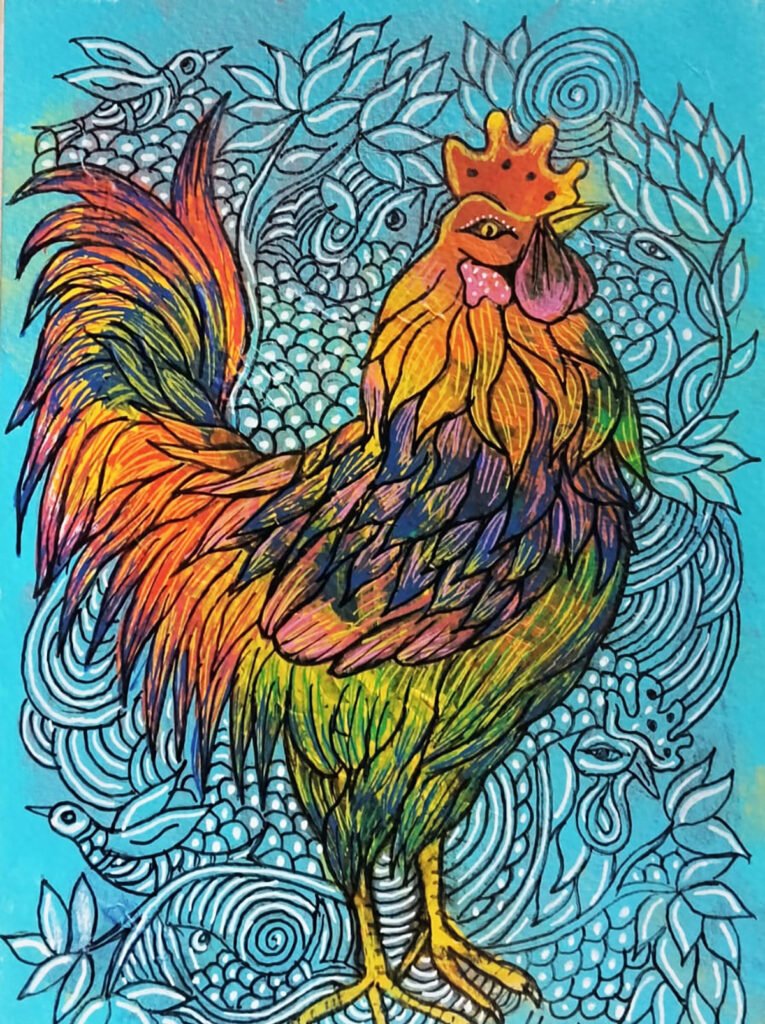
Hariom Kuthwaria (M.A. in Drawing & Painting, Gwalior, Madhya Pradesh) is a nationally recognized visual artist whose work has earned widespread appreciation for its artistic excellence and cultural significance. Over a career spanning more than two decades, he has developed a distinctive artistic voice that seamlessly blends folk traditions with contemporary expression.
He was awarded the prestigious Senior Artist Fellowship by the Ministry of Culture, Government of India, in recognition of his outstanding contribution to art and culture. He also received the Creative Vanguard Award from the JD Institute of Design & Fashion Technology, New Delhi.
His artistic achievements include participation in more than sixty-five group exhibitions and seven solo exhibitions across India. He currently serves as a Senior Graphic Designer at the PHD Chamber of Commerce and Industry, New Delhi, while continuing to pursue his artistic practice with unwavering dedication.
Art as a Bridge
For Hariom Kuthwaria, art is more than a creative pursuit; it is a means of fostering dialogue between past and present, culture and innovation, humanity and nature. His paintings remind us that traditional wisdom remains profoundly relevant in addressing contemporary challenges. Through vibrant imagery, symbolic narratives, and a deep respect for cultural heritage, he encourages viewers to rediscover their connection with the natural world.
In an increasingly fragmented age, Kuthwaria’s work offers a vision of unity—a world where humans, animals, and nature coexist in mutual harmony. It is this vision, expressed through the living language of folk tradition and contemporary art that makes his artistic practice both timeless and urgently relevant.