Himalayan Silence on Canvas: The Art of Hari Darshan Sankhya
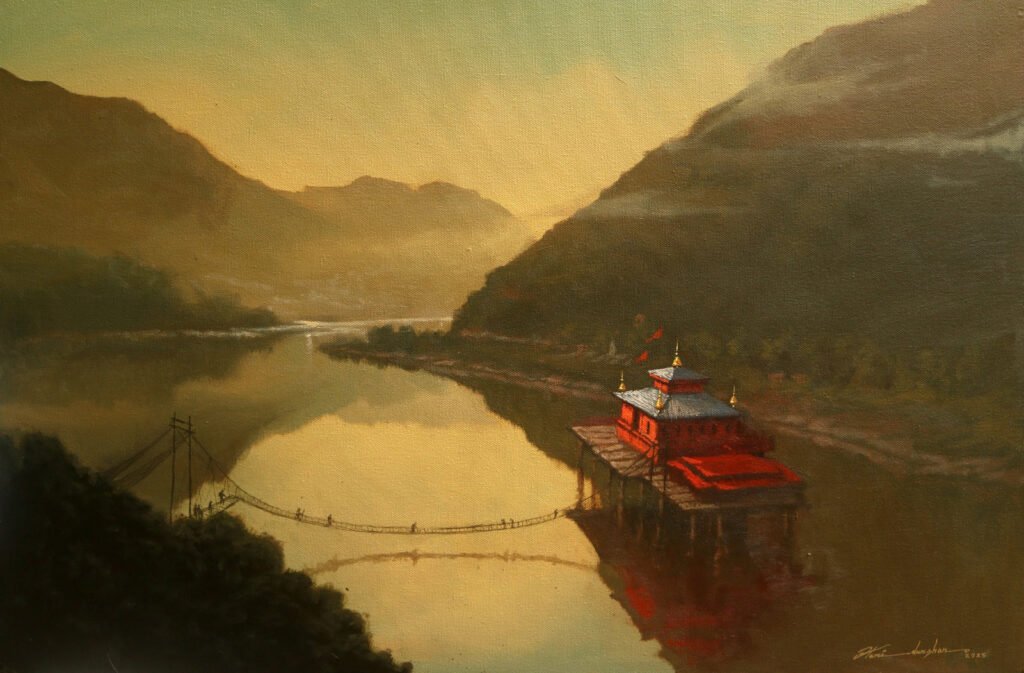
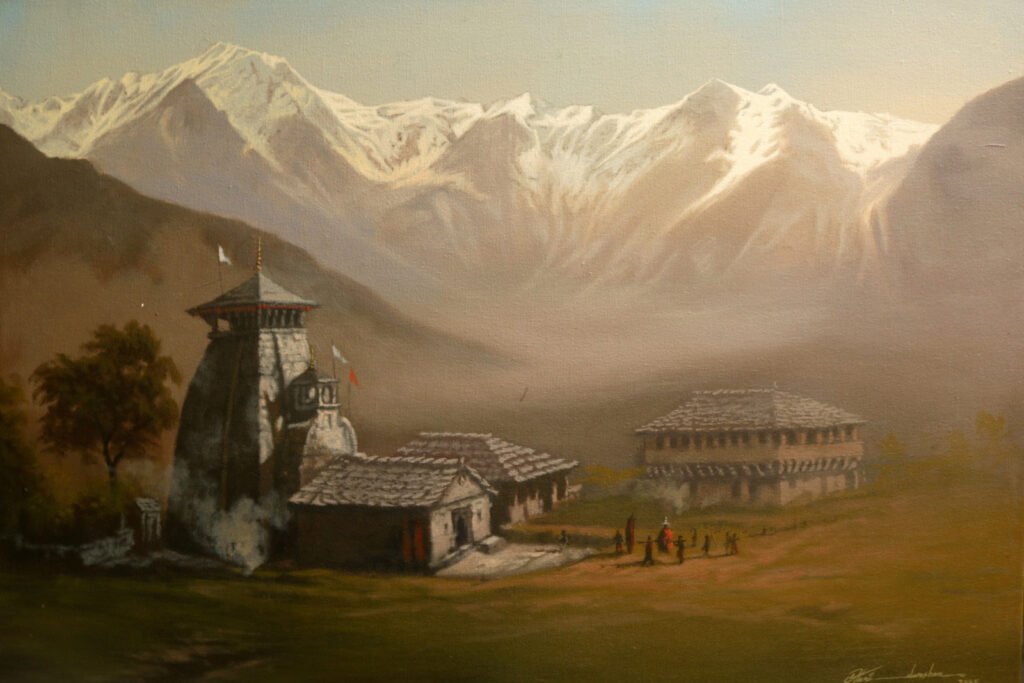
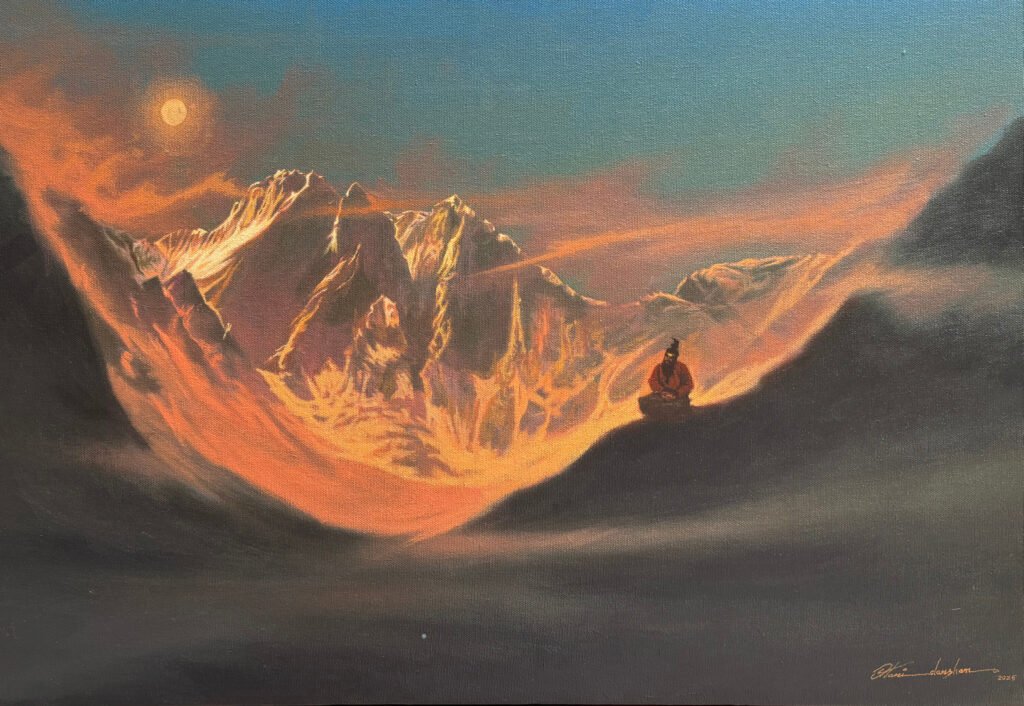
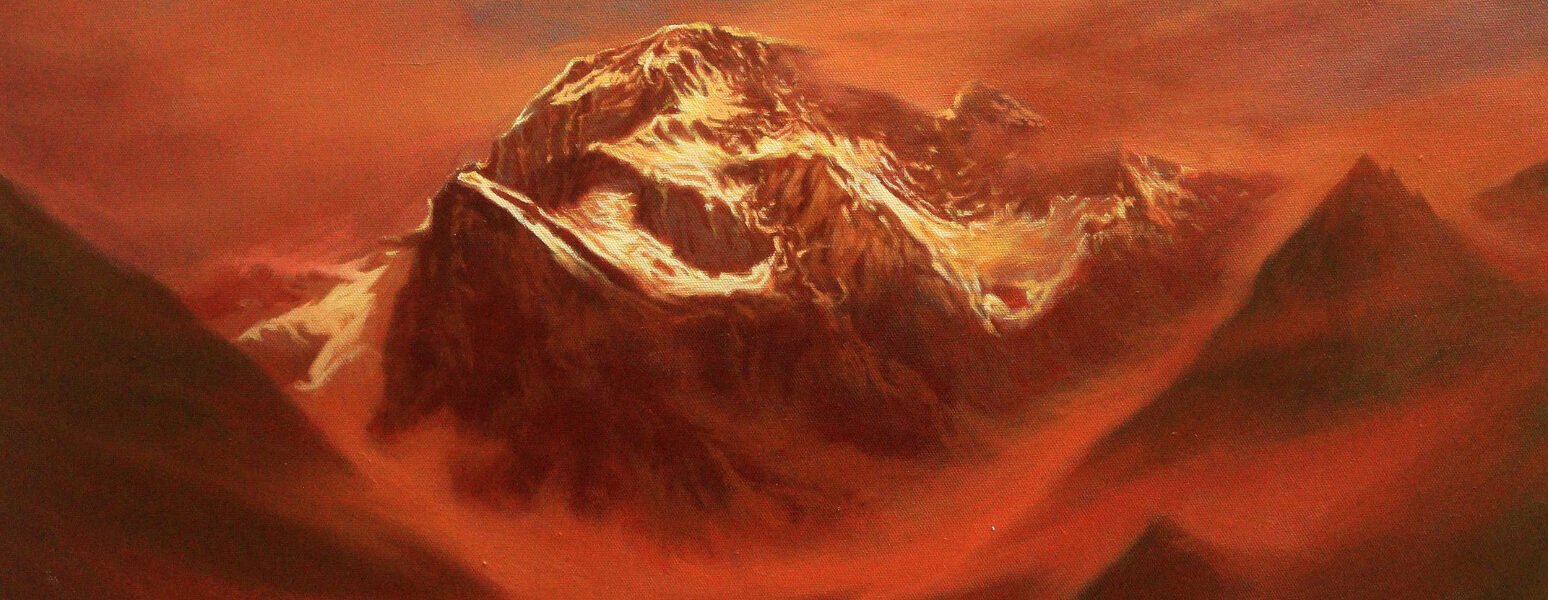
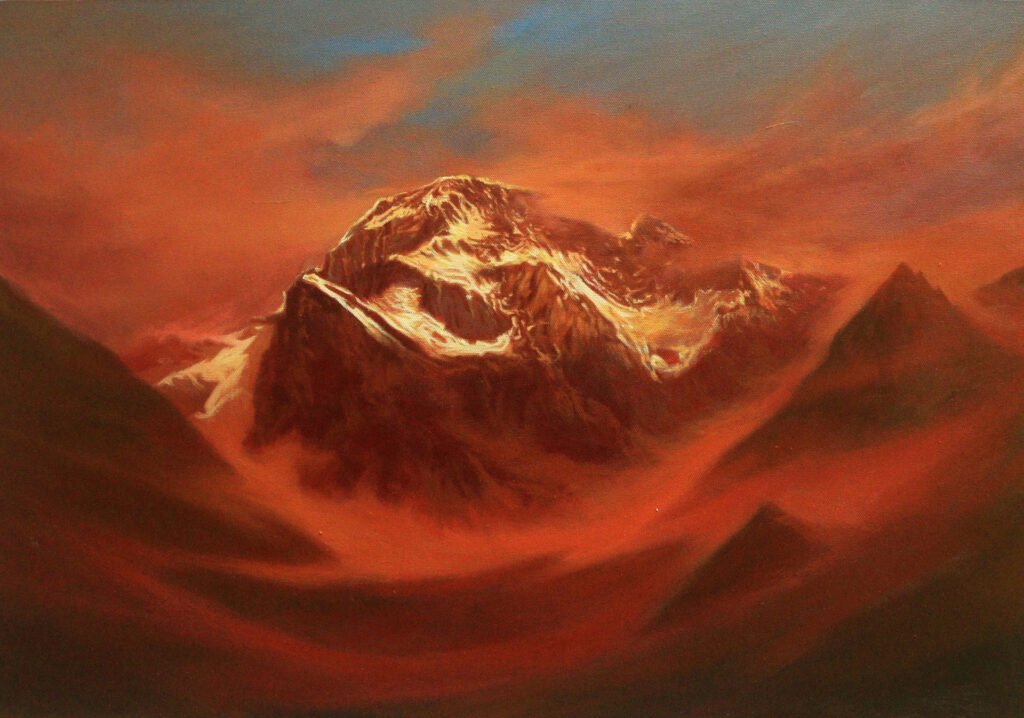
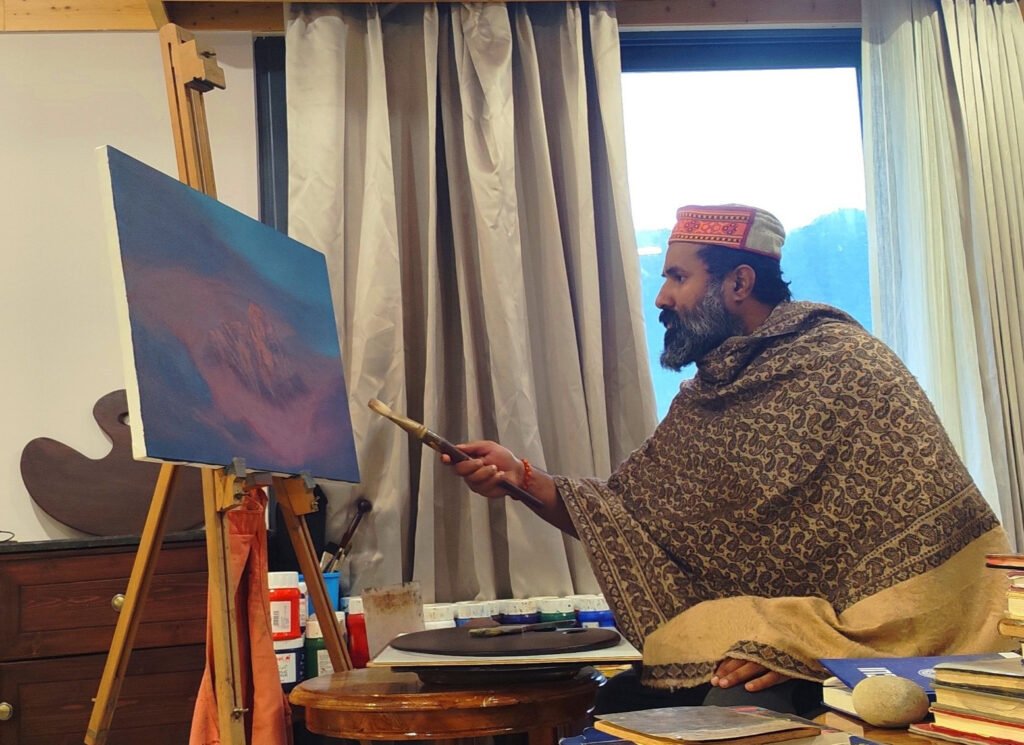
Artist Hari Darshan Sankhya recently showcased the profound stillness and majesty of the Garhwal mountains in his solo exhibition, ‘Himalaya: The Sacred Silence of Spirituality and Peace,’ at Mahatma Gandhi Kashi Vidyapith (MGKVP) in Varanasi. Featuring 21 select works from a massive 108-piece series, the collection is the result of three years of intensive travel, research, and solitude across Uttarakhand.
A Journey of Spiritual Awakening
For Sankhya, the mountains are a divine presence rather than a mere geographical landscape. His creative journey took a definitive turn in January 2023 during a visit to the Kashi Vishwanath Temple, where he first experienced a cosmic rhythm. This moment sparked a three-year exploration of sacred sites, including shrines and caves like Vashishta Gufa, Kedarnath, Tungnath, Rudranath, and Jageshwar temples, alongside majestic peaks such as Nanda Devi and Shivling. Rather than viewing these as mere formations of stone and ice, Sankhya sees them as living embodiments of spirituality.
Overcoming Isolation and Hardships
Translating this vision onto canvas was far from easy. The artist faced numerous challenges during his years of isolation, ranging from the psychological struggle of transitioning from bustling urban life to desolate mountain spaces, to physical dangers like arduous climbs, landslides, and a severe shortage of art materials. He also faced the ongoing challenge of being at the exact right place at the right moment to capture fleeting spiritual energy. Ultimately, this loneliness dissolved into a creative silence, which now serves as the heartbeat of his entire collection.
Philosophy, Color, and the Visual Rosary
Sankhya’s paintings are characterized by mist, shifting lights, temple silhouettes, and mountain forms that dissolve and reappear like memories. He notes that he does not paint subjects as they appear, but rather as they take shape in his consciousness. Guided by the Triguna theory of Sankhya philosophy (sattva, rajas, tamas), he employs luminous blue-pink hues to represent sattva and deep, mysterious tones for tamas. Furthermore, drawing inspiration from the 108 beads of a meditative rosary (mala), Sankhya views his 108 paintings as a visual rosary—a collective prayer for humanity and world peace.
A Tribute and a Warning
Beyond aesthetics, the collection carries a crucial message of preservation. It honors the legacy of renowned Russian painter Nicholas Roerich and the Roerich Pact, highlighting the enduring need to protect culture during conflict. In addition to cultural preservation, Sankhya strongly advocates for the environment, criticizing the commercialization of the mountains and warning that viewing the Himalayas purely through the lens of entertainment harms their fragile ecology. Through his art, he poses a vital question to viewers: will we choose to save the sacred silence of the Himalayas, or surrender them to noisy commercialization?