Echoes of the Serene and the Chaotic Inside the Meditative Abstraction of Abhijit Pathak
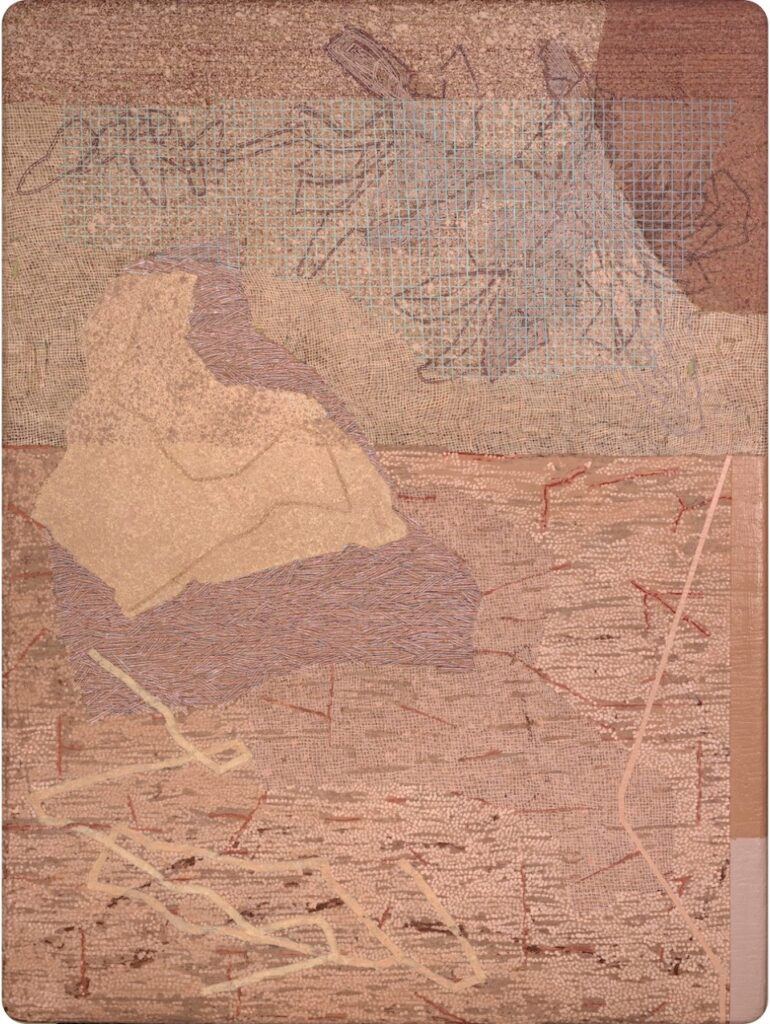
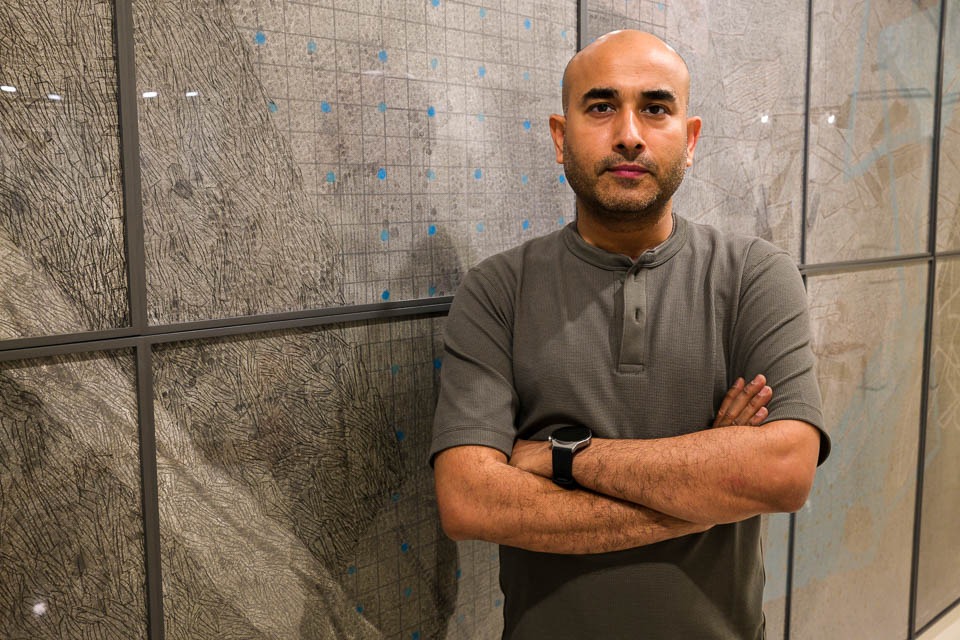
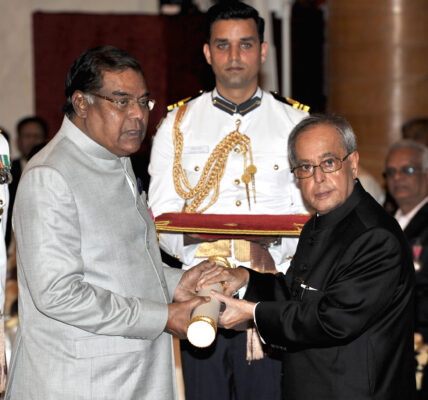
In the landscape of contemporary Indian art, few abstract expressionists capture the structural friction between urban turmoil and natural tranquility quite like Abhijit Pathak. Born in 1986 and currently based in New Delhi, Pathak has quietly carved out a reputation as a master of layered, deeply introspective canvases. A recipient of the prestigious 52nd National Award by the Lalit Kala Akademi and a veteran of the Beijing International Art Biennale, his practice moves effortlessly between international residencies—such as Can Serrat in Barcelona—and prominent domestic spaces like Art Heritage and the India Art Fair.
Yet, to understand the sweeping, tactile surfaces of his mixed-media works, one must travel back to the rural landscape of his childhood, where his creative impulses were first forged amidst rice fields, gentle streams, and the devotional rhythms of domestic life. Harnessing the Vedas: The *Panchdhatu* Series Currently, Pathak is channeling his ancestral and philosophical roots into a stunning series of mixed-In the landscape of contemporary Indian art, few abstract expressionists capture the structural friction between urban turmoil and natural tranquility quite like Abhijit Pathak. Born in 1986 and currently based in New Delhi, Pathak has quietly carved out a reputation as a master of layered, deeply introspective canvases. A recipient of the prestigious 52nd National Award by the Lalit Kala Akademi and a veteran of the Beijing International Art Biennale, his practice moves effortlessly between international residencies—such as Can Serrat in Barcelona—and prominent domestic spaces like Art Heritage and the India Art Fair.
Rooted in Soil and Sound: From Varanasi to Abstract Expressionism
Pathak’s artistic awakening was split between the raw beauty of nature and an early immersion in traditional visual forms. From the age of seven, his mother tasked him with adorning their home with sacred religious symbols made from rice and flour paste. This early tactile relationship with drawing eventually led him to the historic city of Varanasi, where he pursued his Bachelor of Fine Arts. Embedded in a city celebrated for its temple architecture, classical music, and *tehezeeb* (grace), Pathak absorbed a distinct aesthetic sensibility that continues to define his work today.
However, entering the contemporary art market as a creator from a rural background with minimal financial means came with immense challenges. Pathak navigated these structural struggles by anchoring his focus on the structural balance of his compositions, drawing deep inspiration from the legendary modernists V.S. Gaitonde and Nasreen Mohammedi. Like his role models, Pathak’s work demands patience; its meaning is rarely caught in a fleeting glance but is slowly revealed to the viewer over time.
Harnessing the Vedas: The *Panchdhatu* Series
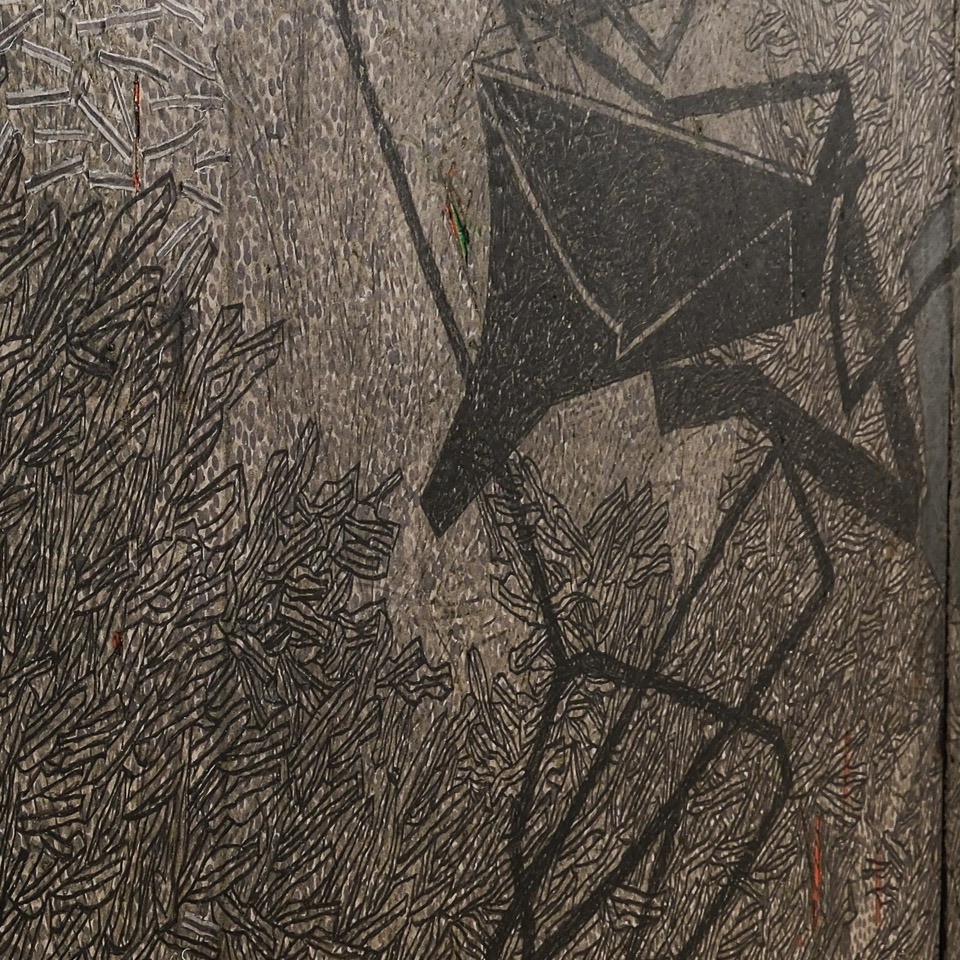
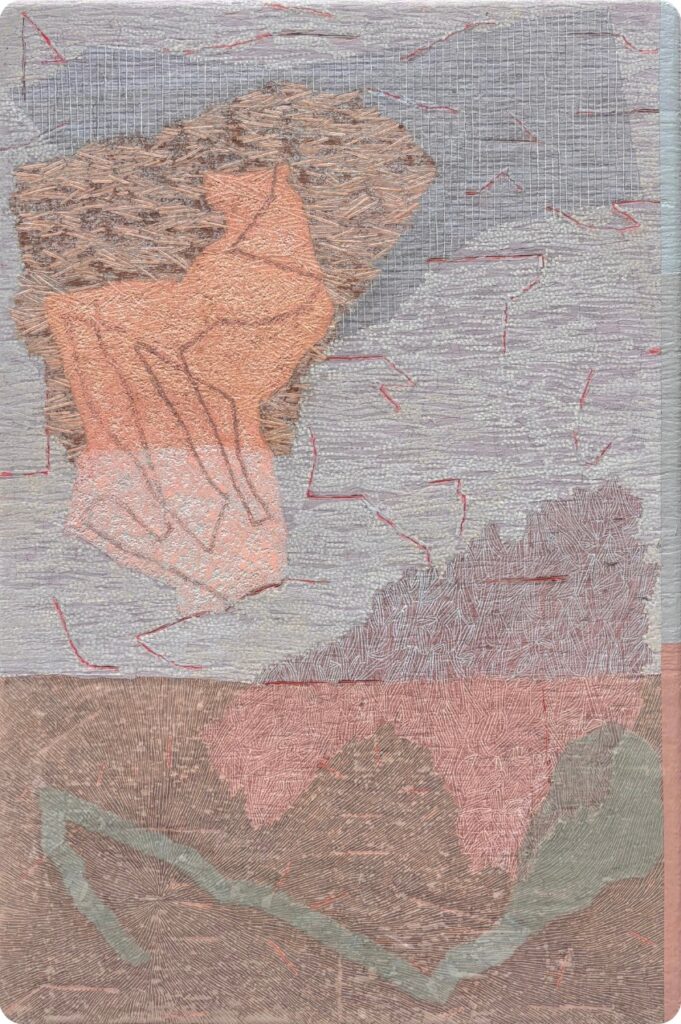
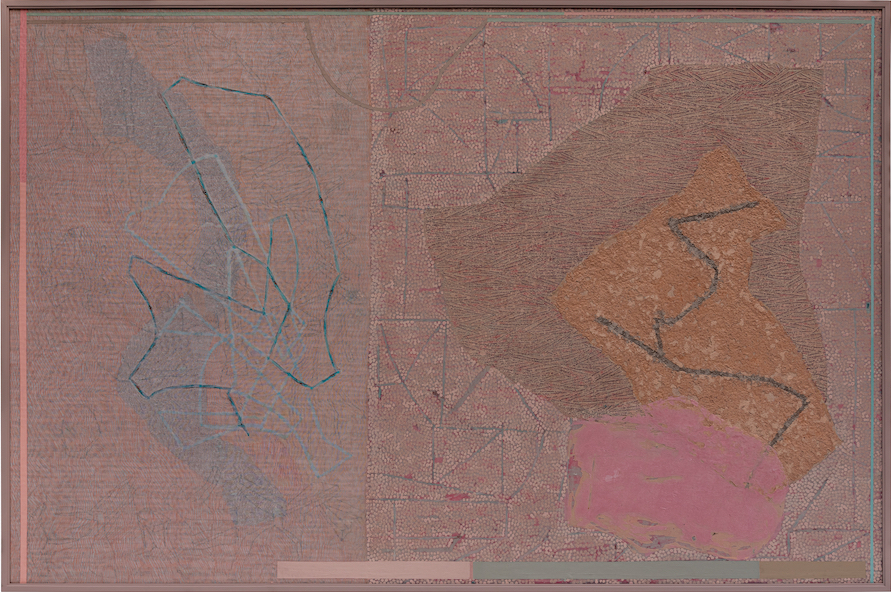
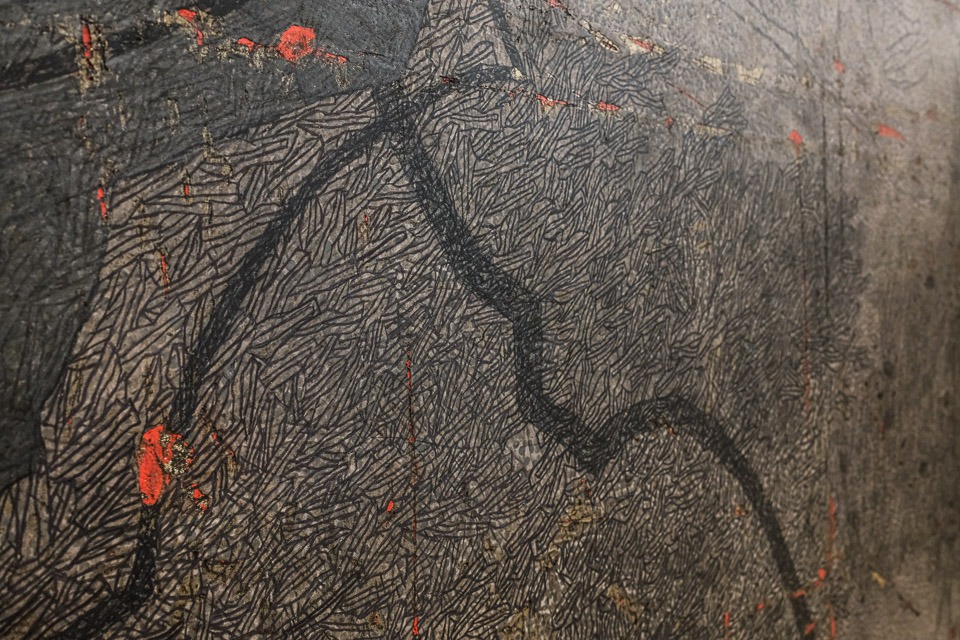
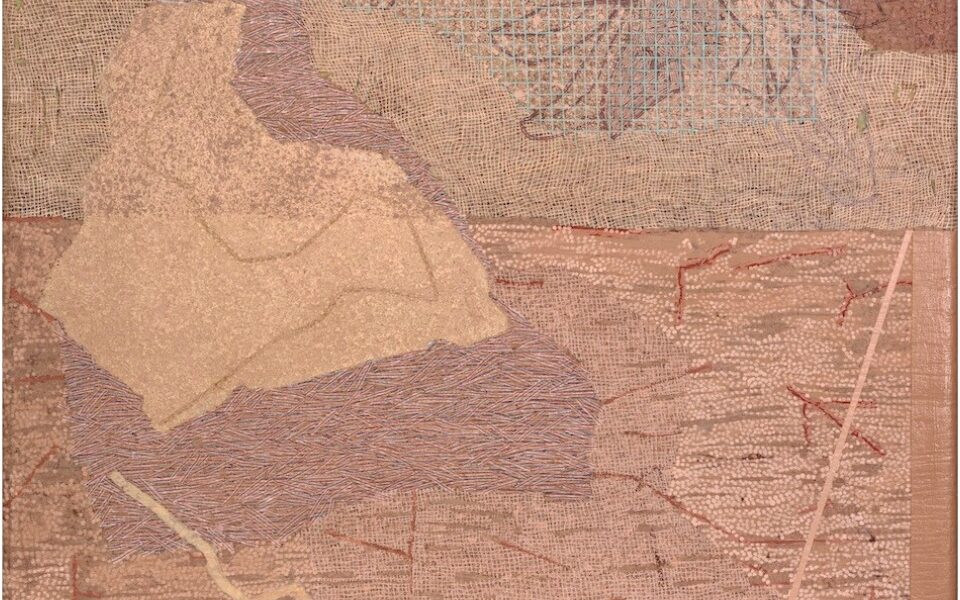
Currently, Pathak is channeling his ancestral and philosophical roots into a stunning series of mixed- media canvases centered on *Panchdhatu*—the traditional Vedic combination of five metals: gold, silver, brass, copper, and iron.
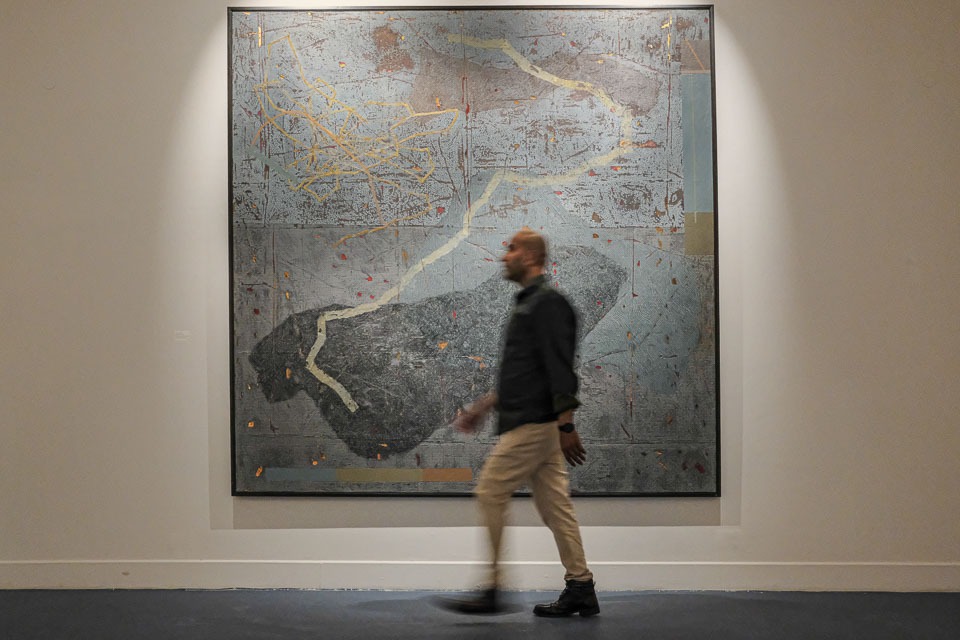
In ancient Indian culture, *Panchdhatu* was utilized as a holistic tool to restore equilibrium to human life. Pathak translates this ancient metaphysical principle onto massive $42 \times 60 \text{ inch}$ canvases, using raw textures and metallic tones to symbolize physical and spiritual balance. Through these works, tradition is stripped of its literal iconography and reborn as a primal, abstract force.
Navigating Turmoil: The Post-Pandemic Mindscape
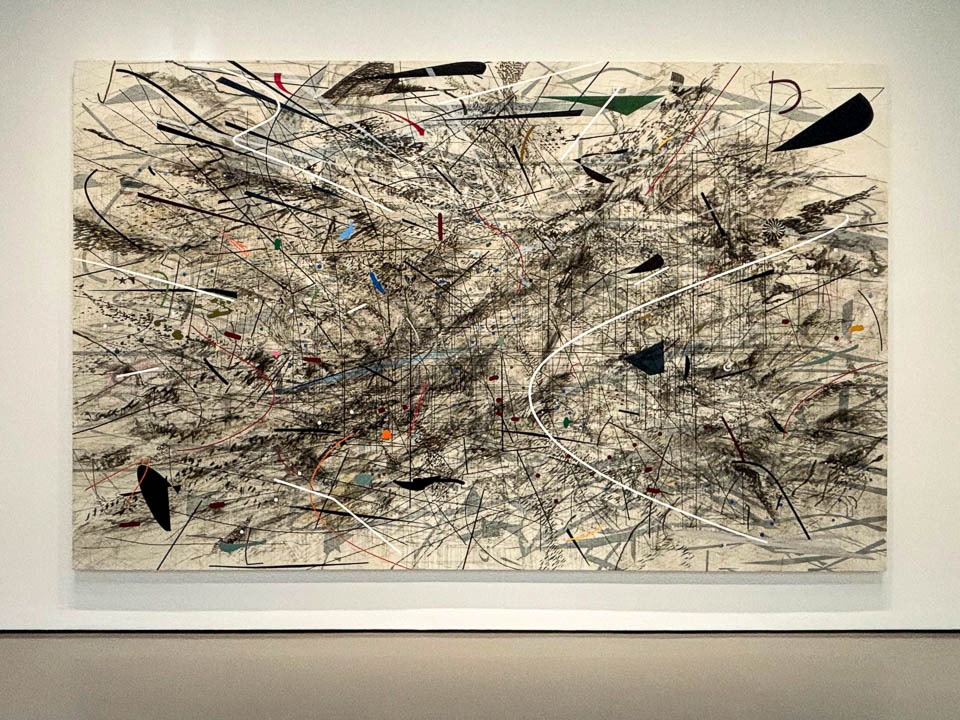
While heavily celebrated for his large-scale canvases—such as the evocative *Milieu* series—Pathak strongly welcomes the multidisciplinary evolution of contemporary art. His personal practice regularly expands into video art, site-specific sound installations, and photography, most notably seen in his immersive project *Sensorium* at the Art Heritage gallery.
This multidisciplinary fluidness became a vital survival mechanism during recent global upheavals. In his video piece *State of Mind*, Pathak documented the extreme emotional ebb and flow of isolation. He explains:
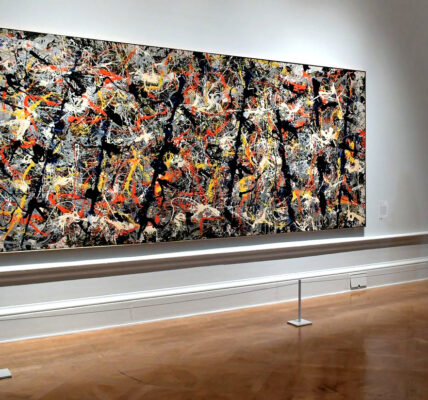
“Through this time of upheaval, I have been attempting to document my state of mind from being uneasy, full of turmoil and confusion at one extreme to a state of tranquillity, peace and bliss on the other. Harmony and chaos go hand in hand. One loses its identity if the other does not exist.”
The Architecture of Creation: Notes from the Journal
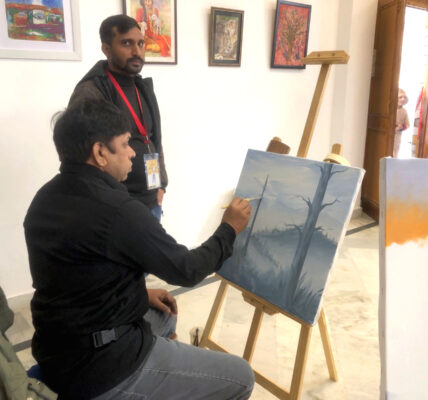
For Pathak, the physical act of painting is merely the final act of a long, journalistic process. Long before a canvas is stretched in his studio, Pathak collects raw material through his surroundings. He travels extensively, absorbs Indian classical music, and maintains a meticulous daily practice of gathering sketches, field recordings, videos, and written notes in his journal.
“Making sense of all the complexities is the challenging part,” Pathak notes. “The process of creating work in the studio after that is much simpler.”
Ultimately, Pathak views his art not merely as a commercial object, but as an inescapable synthesis of social interaction and self-expression. By confronting the financial, psychological, and physical anxieties of our current era with a lens of optimism, his work remains a powerful testament to balance—proving that even within absolute chaos, a zen-like harmony is always waiting to be discovered.