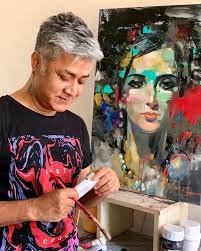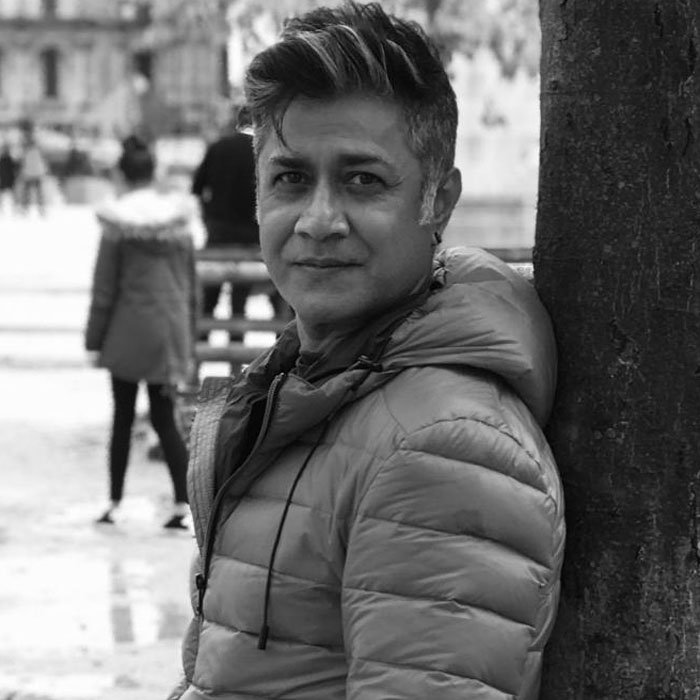
In Conversation with Niladri Paul
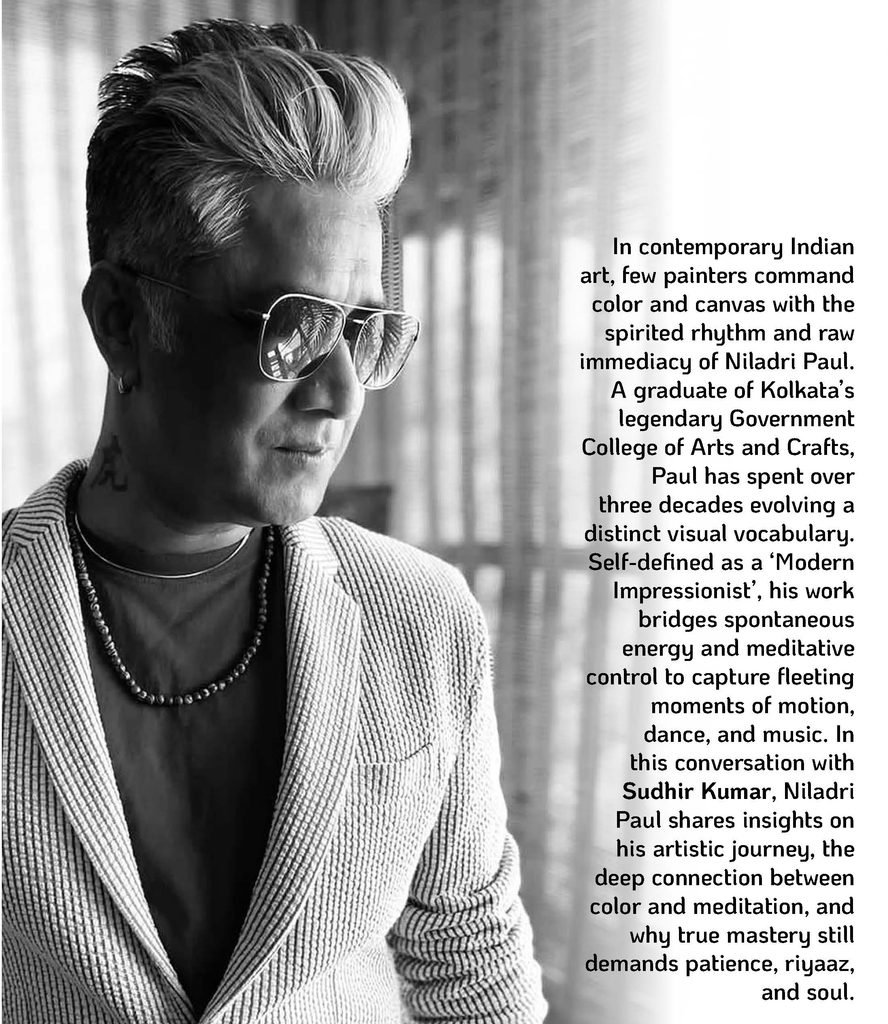
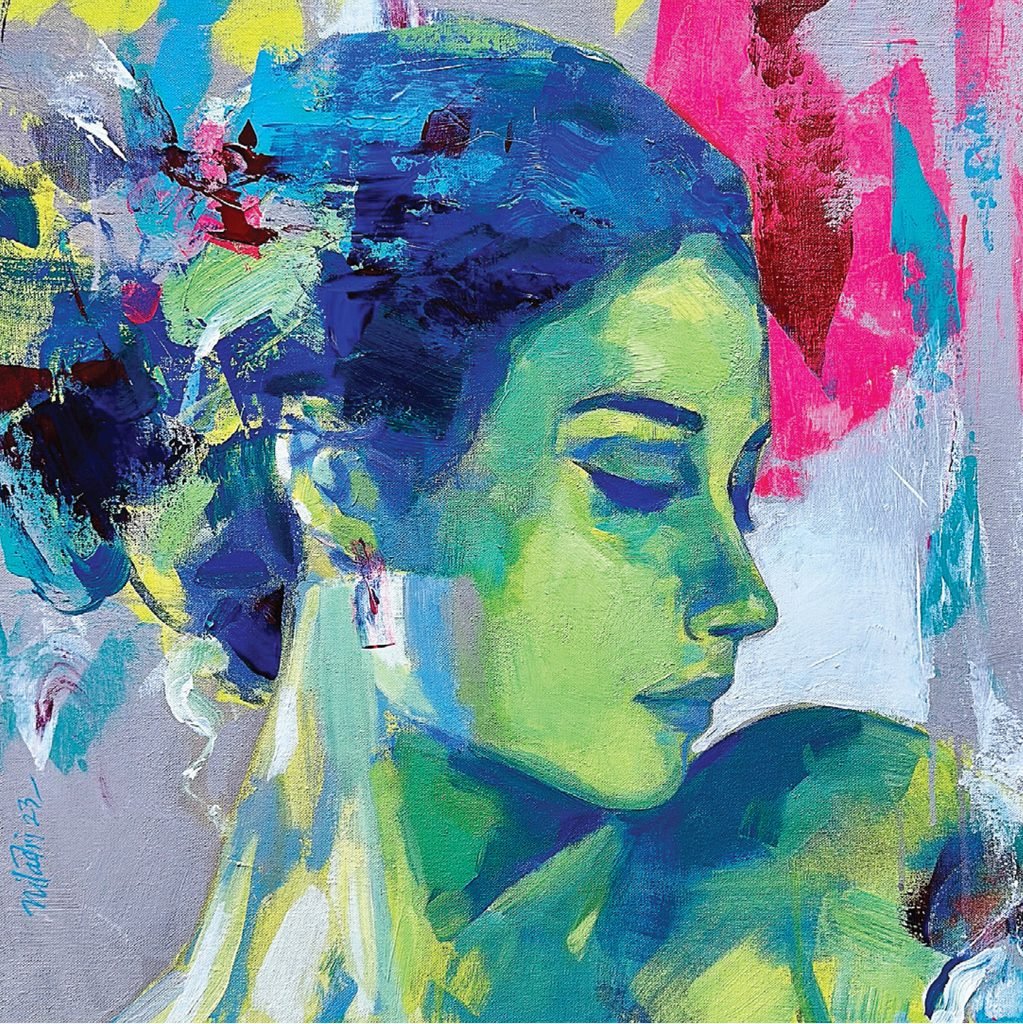
Sudhir J. Kumar: You graduated from Government College of Arts and Crafts, Kolkata in 1986. How did Kolkata as a city shape the artist in you?
Niladri: Kolkata at that time was a very liberal, progressive city—an environment highly conducive for all art forms to prosper. Nobody was judging anybody; all forms of art were celebrated and looked up to. Every household had someone singing, dancing, painting, sculpting, acting, doing theatre, or writing. The economy may not have been that great, which is why we saw a lot of these talented people eventually moving to Delhi and Mumbai.
Sudhir J. Kumar: You are a native of Jharkhand, and critics say a tribal avatar of Radha-Krishna haunts your work. How much do your roots still appear on your canvas?
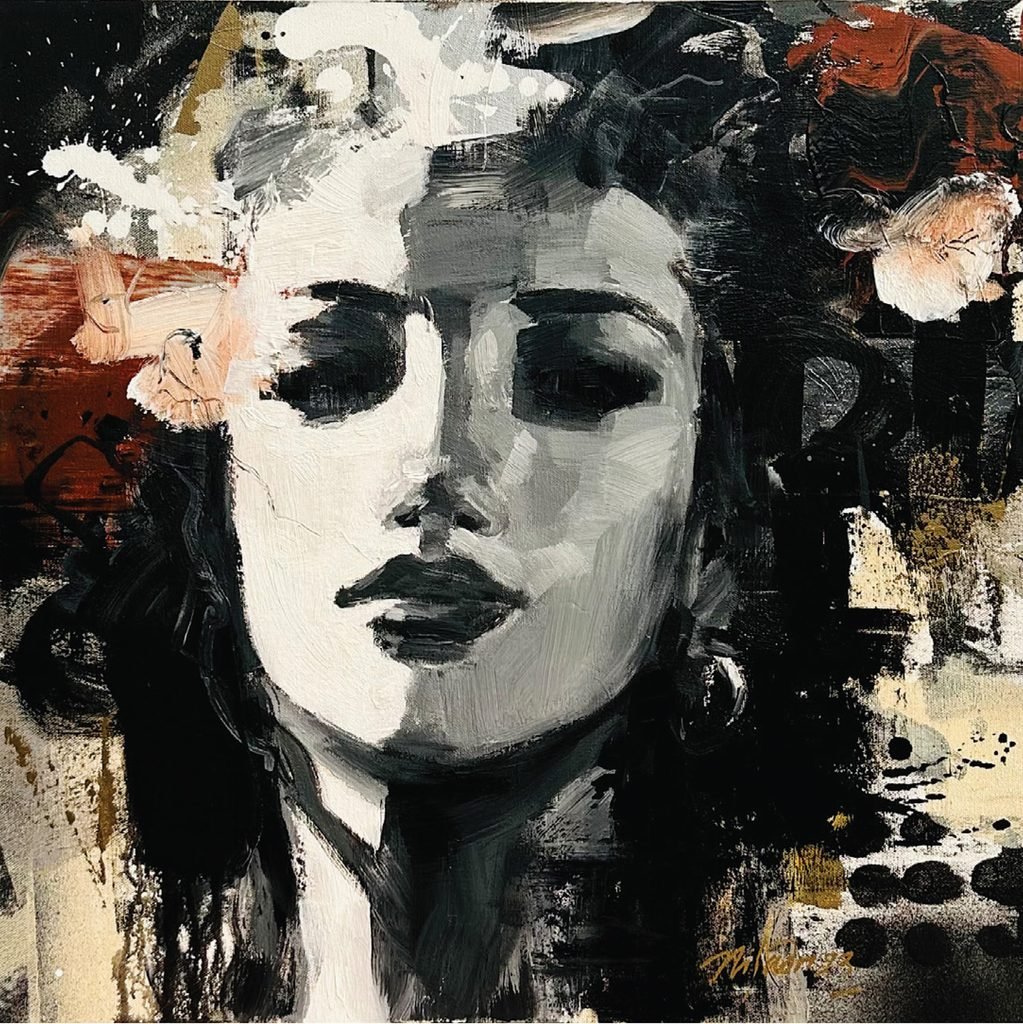
Niladri: I am from Jamshedpur, a very cosmopolitan town in what is now Jharkhand. My works on Radha-Krishna and Shiva are all inspired by the dance forms and theatre or drama I saw performed on stages—not necessarily just from my hometown, but from all over India and even abroad.
Sudhir J. Kumar: I read once someone in a museum told his kids pointing at you, “if you don’t study, this will be your future.” How did you react to that moment?
Niladri: It was a funny anecdote and, of course, laughable. The man had probably never been exposed to any art or culture. He thought that all the students sitting in the museum and sketching were wasting their time, which, in his opinion, could have been better utilized studying.
Sudhir J. Kumar: You have said your wife Nirupama’s support pulled you through tough times. What were those tough times for an artist in Delhi in the 90s?
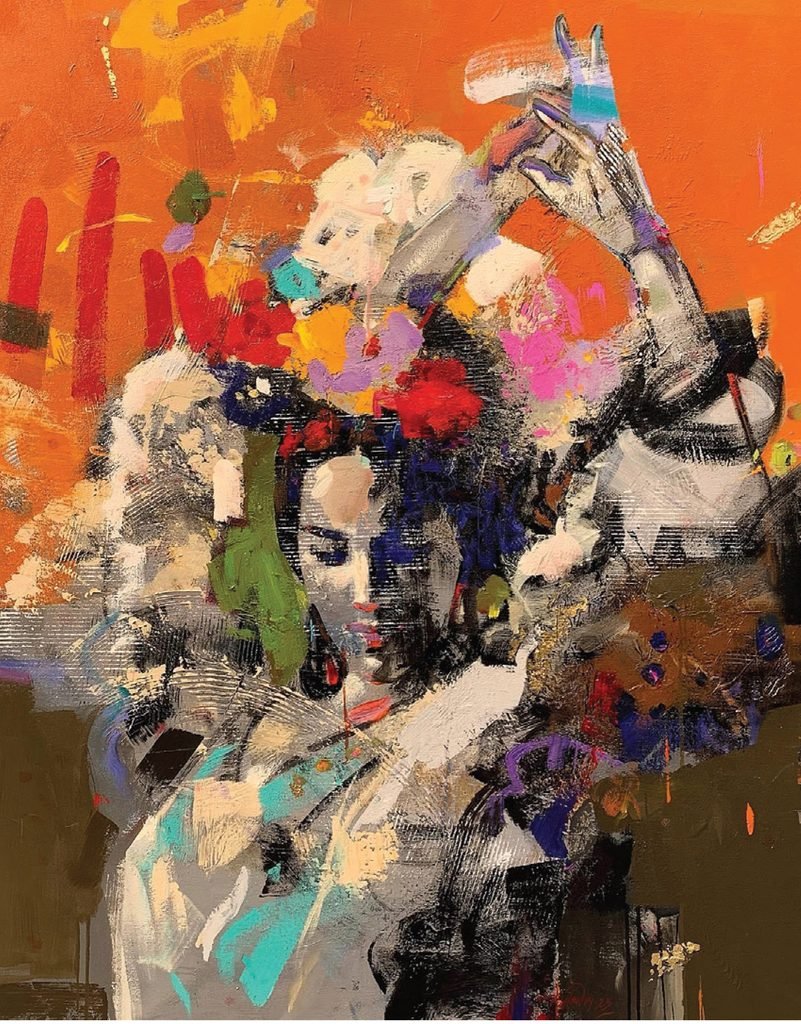
Niladri: When I came to Delhi, I had not contemplated settling down here, nor taking up painting as a career. I started working in an ad agency as an Art Director. That is where I met Nirupama, who was working as a copywriter. She literally pushed me to paint and take my work to a gallery.
The painting—a watercolour—sold within days and gave me immense confidence. There was no looking back from there on. Nirupama has been a rock-solid support, and she has always ensured that I am absolutely free from worldly preoccupations so I could fully concentrate on my creative pursuits.
Sudhir J. Kumar: You were awarded the Senior Fellowship by the Ministry of Culture in 2012. What did those two years of research give to your work?
Niladri: The Senior Fellowship from the Ministry of Culture happened by chance, as I rarely pursue or apply for such things—I am abysmal at networking, too! But the fellowship gave me the freedom to experiment and develop my idiom further. You can see a marked change in my work year after year. I love experimenting with mediums, forms, colours, and themes. Developing a saleable form and then repeating the same thing for decades is just not for me.
Sudhir J. Kumar: You define yourself as a ‘Modern Impressionist’. For a layman, what does that mean?
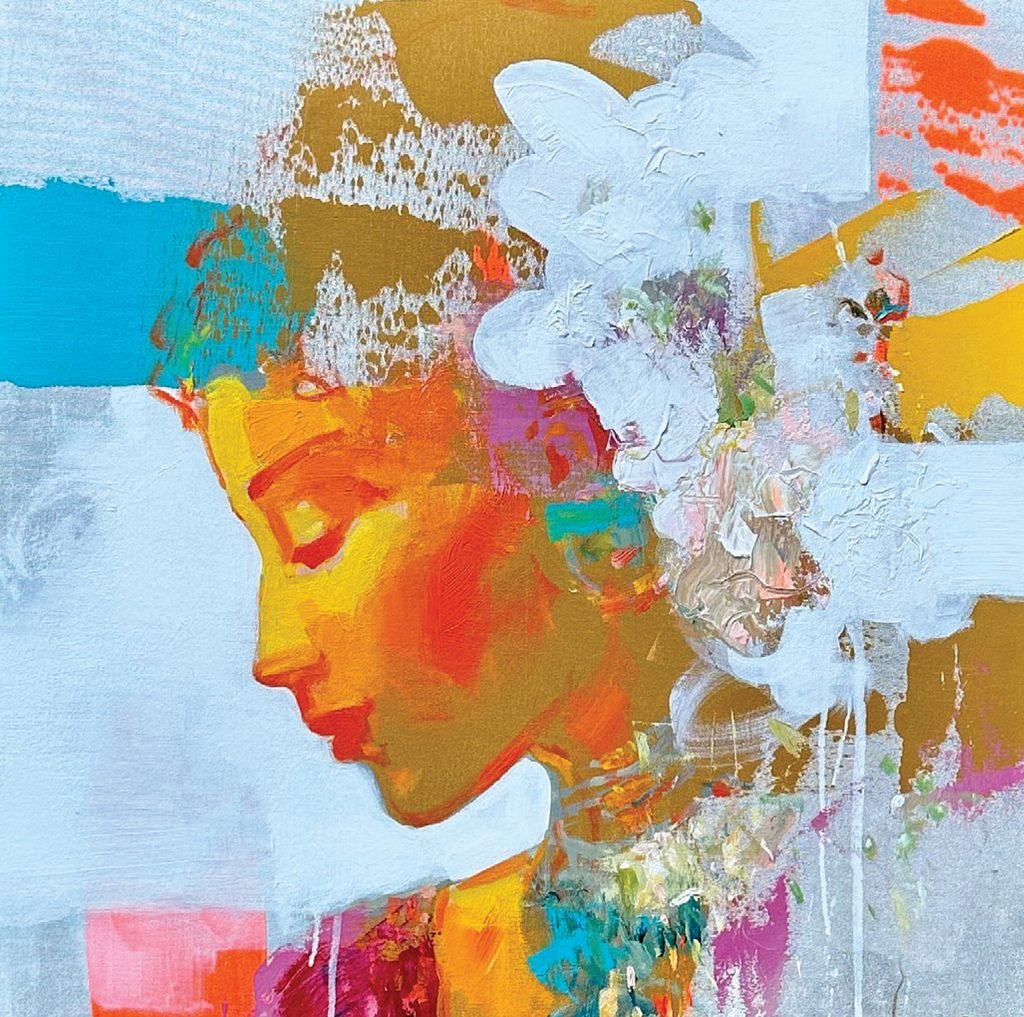
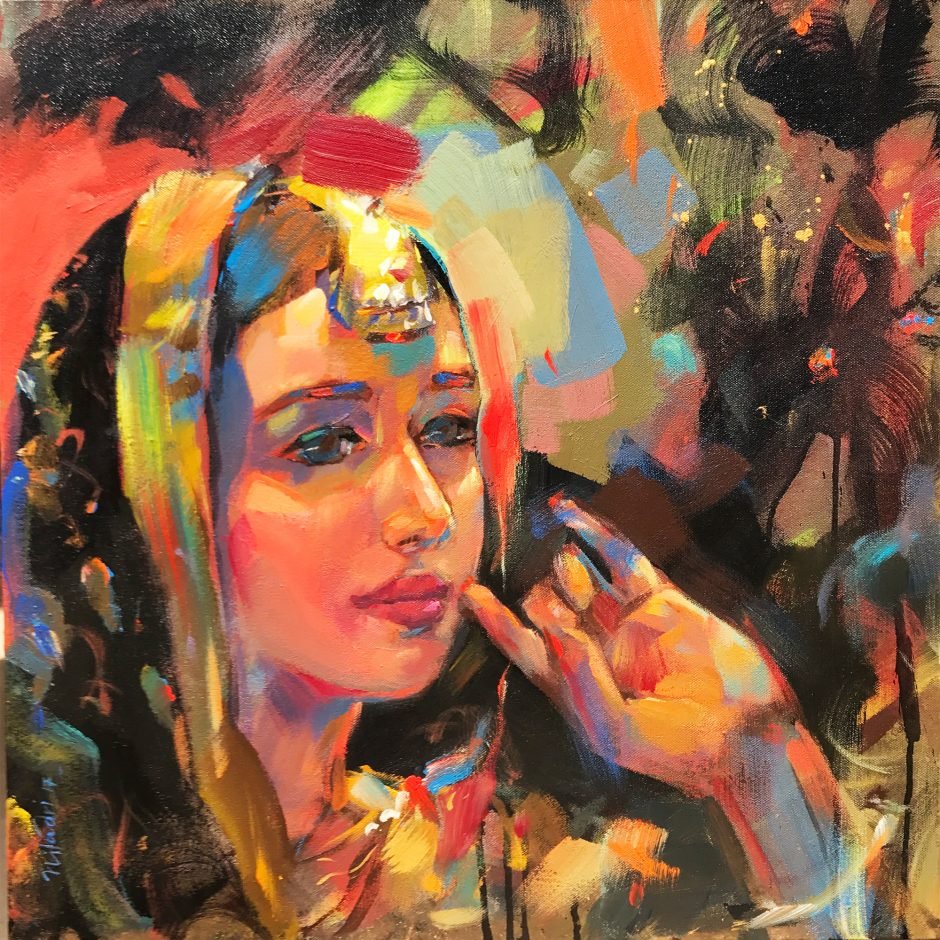
Niladri: Impressionism, to my mind, is simplifying the visual. Converting any form away from pure realism is impressionism. It rejects conventional rules. Spontaneity is most important here—not a smooth presentation finished painstakingly. There is a sense of urgency to transfer energy onto the canvas, capturing fleeting moments and emotions.
Sudhir J. Kumar: Your style is described as “minimum, controlled strokes to capture the fleeting thought.” How do you practice that control?
Niladri: Achieving controlled strokes in an unbridled composition and spontaneous style is extremely challenging and comes only after years of practice. There is no other way. Mastering it requires a deeply meditative mind that can guide the hand as it moves wildly and spontaneously all over the canvas—a mind that knows how to command a vivaciously vibrant colour palette, and crucial of all, knows when and where to stop.
Sudhir J. Kumar: You work mostly with acrylics on large canvases with bold colors and proud strokes. Why acrylic and not oil or watercolor?
Niladri: Yes, I mostly work with acrylics, but I do a lot of watercolour too, especially outdoors. I love the intrinsic challenge of watercolour painting: you cannot correct it, and therein lies the thrill. However, acrylic painting perfectly suits my style and temperament because my process is spontaneous, unplanned, and unrestrained.
Sudhir J. Kumar: You have studied auto-suggestion, meditation, and colour-gazing, and you consider them related to painting. How does meditation come onto the canvas?
Niladri: I am a lifelong learner—I love discovering new things. Someone introduced me to the subtle effect of colour in our lives, and I dived deep into the subject. There is a whole science behind it. Art on your wall is not just ornamental; you look at it every day, many times. The colour, form, and composition can affect you on a subconscious level. Meditation is a proven science that has helped me tremendously in my art practice as well as in daily life, and I recommend it to everyone.
Sudhir J. Kumar: You have said, “I respond to a cosmic vibration… I have no conception of what it will look like before I begin.” So how does a painting actually start for you—with a color, a line, or a mood?
Niladri: My art is rarely pre-planned. It begins as a thought in my mind—a kind of vibration or restlessness that needs to transfer onto canvas through colours. I rarely think beforehand about the colours I am going to use; it just happens. Even I am taken aback when I look at my finished painting. “Did I really do that?” is a recurring question. So it is definitely a cosmic vibration that I am responding to.
Sudhir J. Kumar: You are fascinated by anything that generates motion—dance, anatomy, rhythm, music. How do you freeze motion on a static canvas?
Niladri: Motion, dance, rhythm, and melody all inspire me deeply. It is my constant endeavour to capture that fleeting moment of dynamic movement on canvas.
Sudhir J. Kumar: What is your riyaaz? You once said riyaaz is the key. What does your daily studio routine look like?
Niladri: Riyaaz in any art form is the foundation you build upon. Practice, practice, practice—there is no shortcut to learning. When I am painting, I lose all sense of time; I have no realization of morning, noon, or night, nor hunger or tiredness.
Sudhir J. Kumar: You also love cooking and collect recipes and spices from your travels. Do you see a connection between cooking and painting?
Niladri: Cooking is my other great passion—it is therapeutic for me. Cooking can be immensely creative because you can experiment endlessly. There are colours, textures, and tangible outcomes that you can see, feel, smell, and taste. You can easily see the intrinsic similarity between the two arts.
Sudhir J. Kumar: Your trilogy on performing arts ended with ‘Sutradhaar’ at Jehangir Art Gallery, Mumbai and Visual Arts Gallery, Delhi. Who is the Sutradhaar for you—the dancer, the actor, or the painter himself?
Niladri: The Sutradhaar is the painter, of course. He brings the story together, presents it coherently for the art connoisseur to enjoy, and preserves it for posterity.
Sudhir J. Kumar: You use Brahmi script, vibrant abstractions, big eyes, and bindis in many works—creating a Japanese billboard feel. Where do these symbols come from?
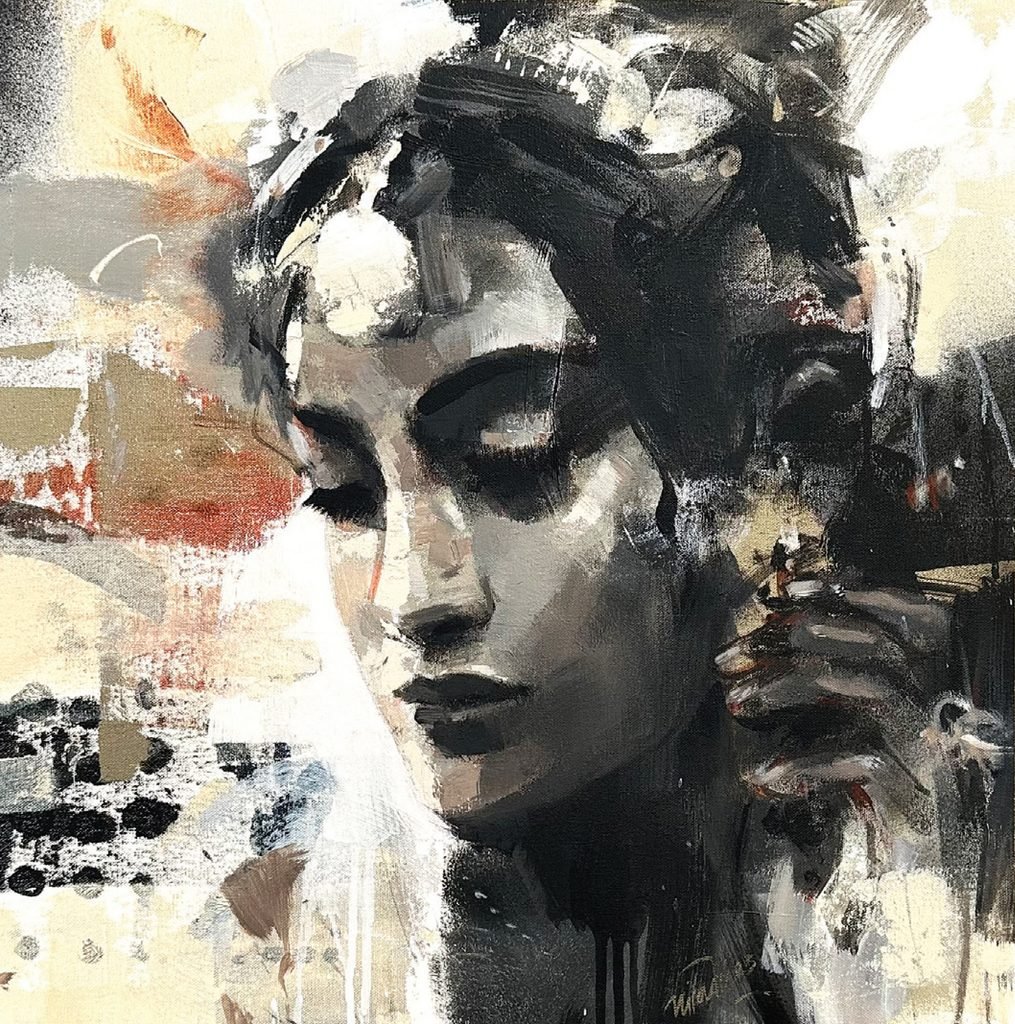
Niladri: As I mentioned, I love to learn and experiment. I was studying various ancient scripts and marvelling at how beautiful their graphic forms were, so I started incorporating them into my paintings. The rest comes down to impressionist expression.
Sudhir J. Kumar: You have done 15+ solo shows at venues like Jehangir, Triveni, India Habitat Centre, Singapore, Dhaka, and the World Trade Centre. Which solo show is closest to your heart and why?
Niladri: I cannot pinpoint one single show. Any show with a discerning audience, meaningful interactions, and financial success becomes a favourite.
Sudhir J. Kumar: Tyeb Mehta, M.F. Husain, and S.H. Raza have inspired you. If you could ask them one question today about their craft, what would it be?
Niladri: If I were to meet Tyeb Mehta, M.F. Husain, or Raza ji today, I would definitely ask them how they achieved such a remarkable level of simplicity in their art forms and what drove their underlying inspiration.
Sudhir J. Kumar: Your work is described as conveying only “positive energy”. In a world full of dark art, why did you choose positivity?
Niladri: While some believe that art should ask uncomfortable questions or mirror society’s ills, I prefer to leave that to others. Everyone has a unique personality. I am an optimist at heart—a cheerful, positive person—and that naturally reflects in my paintings. I choose sunlight over darkness.
Sudhir J. Kumar: From small watercolors in 1992 to large acrylics now, how has your canvas and thought process evolved?
Niladri: There has been a tremendous evolution in my work over the last 35 years. I started with watercolours, moved to oils, and eventually transitioned to acrylics on canvas. One’s thought process naturally evolves with age and experience. The trick is to never be completely satisfied and to keep on evolving.
Sudhir J. Kumar: What is the biggest myth people have about being a full-time painter in India?
Niladri: People still cannot fathom how a person can be a full-time painter. They have many questions about the financial viability, unpredictability, and uncertainty of the profession—and rightly so, as it is not easy. But once you truly start enjoying it, nothing else matters.
Sudhir J. Kumar: Young artists today are chasing Instagram likes and AI art. What advice would you give them?
Niladri: Younger artists today are chasing immediate commercial and societal success. They lack the patience to hone their fundamental skills. The rise of AI has further accelerated this desire for quick results, leaving no room for riyaaz or saadhna. I would advise them to slow down. Excellence in any art form requires years of dedicated practice. Don’t let social media fool you.
Sudhir J. Kumar: You are based in Delhi/Noida now. How does Delhi’s rich cultural life still feed your art?
Niladri: Delhi is culturally very vibrant; there is something happening 365 days a year. With so many art shows, performances, theatre productions, and experimental art forms, it remains deeply inspiring and motivating.
Sudhir J. Kumar: If you were not a painter, what would you be—a chef, a theatre director, or something else?
Niladri: If I weren’t a painter, I could most certainly have been a chef or a designer.